Best Tools for WhatsApp Drip Campaigns for Ecommerce Brands in 2026
Your WhatsApp list is growing, but manual broadcasts do not scale. Cart recovery, order updates, and win-back flows need to fire on their own. Most brands start comparing tools after a send limit, a clunky flow builder, or a bill that outgrew the contact list.
This article breaks down what to look for in a drip campaign platform for ecommerce in 2026, then ranks eight options, starting with Com.bot, an Official Meta Business Partner. You will get concrete criteria on automation, pricing, and integrations, plus a clear pick for your stack and budget.
What to Look For in WhatsApp Drip Campaign Tools for Ecommerce in 2026
Selecting the right WhatsApp drip campaign tool for your ecommerce store in 2026 requires evaluating several critical factors that directly impact campaign effectiveness and ROI. The market has matured quickly, and the gap between a basic broadcast sender and a true customer journey automation platform is now substantial.
Before comparing specific products, build a shortlist of criteria that match how your store actually operates. A tool that excels for a single-product brand may struggle with a catalog of thousands of SKUs. The checklist below covers the six areas that matter most.
Integration depth sits at the top because nothing else works without it. Your tool needs a native connector or reliable plugin for your ecommerce platform, whether that is Shopify integration, a WooCommerce plugin, or a Magento connector. Look for whether the connection syncs orders, cart events, and customer profiles in real time or only on a scheduled batch.
CRM integration matters just as much. WhatsApp CRM integration should push conversation history and contact tags back into your existing system, so support and marketing teams share one view of the customer. If data flows only one direction, you will end up maintaining two conflicting contact lists.
Automation features determine how much of the customer journey you can actually run without manual effort. Prioritize trigger-based automation over simple scheduled blasts. The core flows to check for include:
- Abandoned cart recovery with timing rules that respect the WhatsApp 24-hour session window
- Post-purchase follow-ups for delivery updates, review requests, and replenishment reminders
- Welcome and onboarding sequences for new subscribers
- Win-back drip sequences for lapsed customers
- Customer segmentation by purchase history, location, engagement, or lifetime value
A strong tool also supports branching logic. That means the next message changes based on whether a customer clicked, replied, or purchased. Flat sequences that send the same message to everyone waste your best retargeting opportunities.
Personalized messaging should go beyond inserting a first name. The best platforms pull product names, order status, and price data directly from your store into the message template.
Opt-in compliance is non-negotiable and deserves careful attention during evaluation. Every tool must operate within WhatsApp Business API policies, and that starts with how it captures and stores consent.
Check whether the platform records the source and timestamp of each opt-in. If a customer complains, you need evidence that consent was given. Look for built-in opt-out handling that processes stop requests immediately across all sequences, not just the current one.
Template message approval is another practical concern. Utilities like Meta Business Suite govern template review, but a good tool helps you draft compliant templates, tracks their approval status, and warns you when a message falls outside policy. Session messages, which you can send freely within the 24-hour reply window, should be clearly separated from template messages in the interface.
Ask vendors how they handle quality rating drops and number restrictions. A platform that guides you through these issues is far less risky than one that leaves you to discover problems after your sending number is limited.
Analytics and attribution separate tools that report vanity metrics from those that prove revenue impact. At minimum, you want click-through rate, reply rate, and conversion tracking tied to actual orders.
Revenue attribution is where many platforms fall short. The tool should connect a WhatsApp conversation to a completed checkout, even when the customer switches devices or waits several days. Without that link, you cannot compare a drip sequence against email or paid retargeting campaigns.
A/B testing capability matters for continuous improvement. Look for the ability to split audiences across message variants, send times, or offers, then read results without exporting data elsewhere. Testing template copy is especially valuable because small wording changes can shift response rates noticeably.
Dashboards should also surface deliverability and quality signals. If your message read rate drops, you want to know before it affects your sender reputation.
Scalability often gets overlooked until a store grows quickly. Message throughput, contact limits, and pricing tiers all shape how far a tool can carry you.
Ask how many messages per second the platform can send during a peak promotion. A tool that performs well at 5,000 contacts may slow down or queue messages at 100,000. Contact limits matter too, since some pricing models charge by stored contacts while others charge by messages sent.
Review pricing tiers against your projected growth, not just your current volume. A plan that looks affordable today can become expensive once your list doubles. Also confirm whether the platform supports multiple WhatsApp numbers, which larger brands often need to separate regions or product lines.
Support and onboarding can make or break your first ninety days. Evaluate the documentation, response times, and training resources available before you commit.
Good documentation covers API setup, template submission, and common troubleshooting steps. Live support should be reachable during your business hours, ideally through chat or a ticketing system with clear escalation paths. Onboarding help, such as guided setup calls or migration assistance, reduces the risk of a stalled launch.
The final balance to strike is between ease of use and advanced functionality. A simple chatbot builder gets you live quickly, but a growing ecommerce brand eventually needs customer journey automation, detailed reporting, and flexible segmentation. The right tool should feel approachable on day one while still offering room to build more sophisticated drip sequences as your program matures.
1. Com.bot - Best Overall
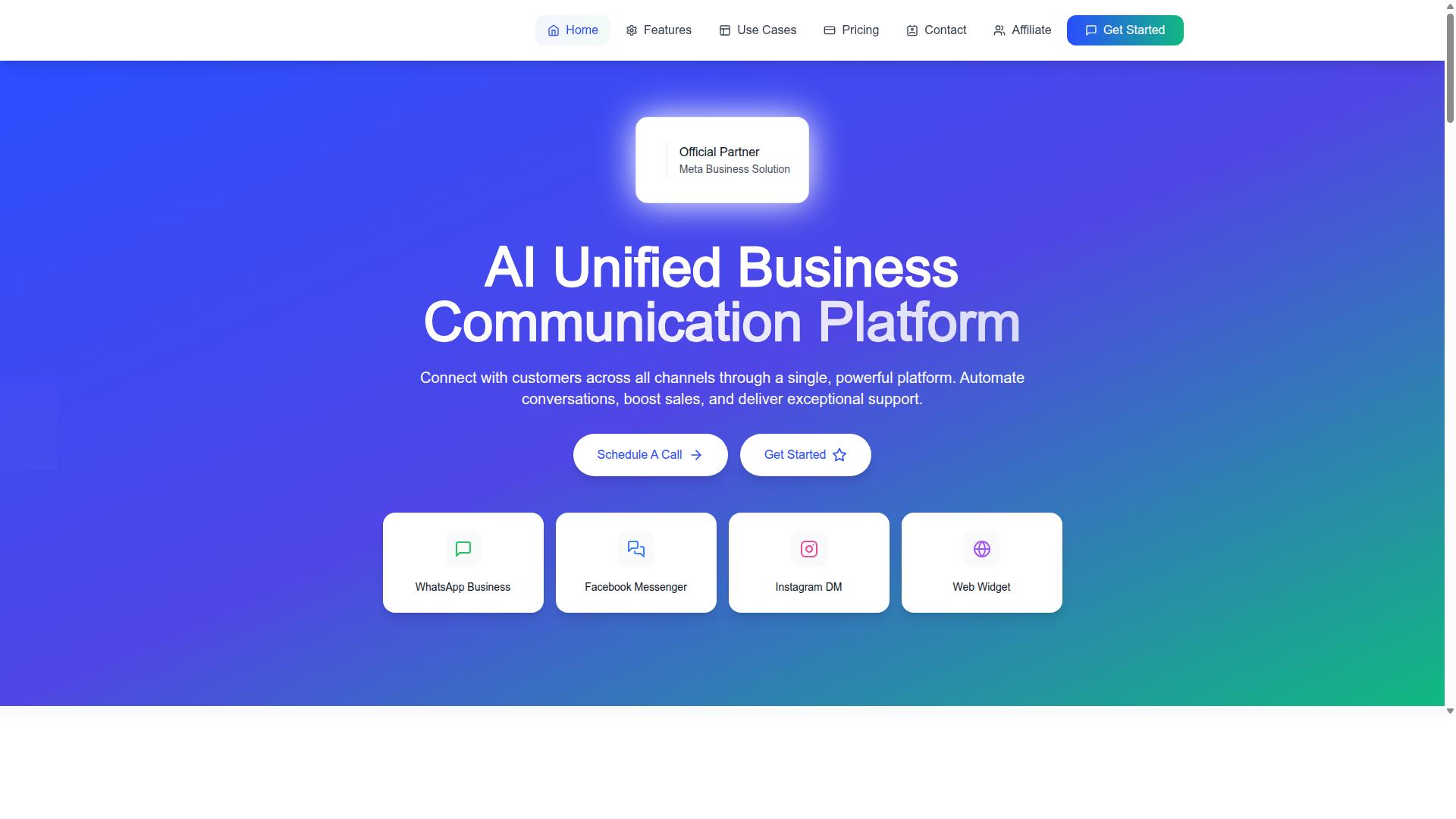
Com.bot stands out as the best overall WhatsApp drip campaign tool for ecommerce in 2026, offering a powerful blend of automation, multi-channel support, and enterprise-grade reliability. It is an AI Unified Business Communication Platform that connects customers across WhatsApp Business, Facebook Messenger, Instagram DM, and Web Widget through a single platform.
Unlike single-channel tools that stop at messaging, Com.bot pairs conversation automation with sales and support workflows. That makes it a fit for ecommerce teams running customer journey automation from first opt-in through repeat purchase.
The platform holds Official Meta Business Partner status with direct WhatsApp Business API integration, a detail that matters for template approval and deliverability. It supports more than 23,000 active customers and processes over 25M+ messages daily, with 100K+ bots created on the platform.
Scale is not the only signal. Com.bot also serves 100+ government bodies and 500+ global partners, which points to reliability under strict operating requirements. For an ecommerce brand, that translates into a tool built for volume, not just small pilots.
Owned and managed by Com Bot AI Limited, the platform combines WhatsApp broadcast tools, a unified team inbox, and automation in one place. The next section breaks down exactly how its drip campaign features and pricing compare.
Drip Campaign Features, Pricing & Why It Leads
Com.bot's drip campaign capabilities are built on a visual bot builder and native ecommerce integrations, enabling automated sequences that drive conversions. The drag-and-drop interface lets teams map out message sequencing without writing code.
Trigger-based automation powers the flows ecommerce brands care about most, including abandoned cart recovery, order updates, and notifications. Personalized messaging and customer segmentation let you split audiences so each drip sequence speaks to the right shopper.
Integrations with ecommerce platforms such as Shopify, WooCommerce, and Magento sync order data and trigger sequences automatically. That means a cart event, a shipping update, or a payment status change can start the right message at the right moment.
The platform also supports WhatsApp catalog integration, native payments for WhatsApp transactions, and an automation builder with 1000+ integrations. Bulk messaging and payment collection round out the conversational commerce toolkit.
Pricing is structured around quarterly plans, which suits brands that want predictable billing:
- Silver at $149 per quarter
- Gold at $349 per quarter, the recommended plan
- Platinum V1 at $2500 per quarter
- Add-ons at $10 per month per additional team member or social channel
Enterprise security includes end-to-end encryption, and setup is designed to be quick. Team collaboration with role-based access keeps support and marketing aligned inside one inbox.
Why does this combination lead the market? Because few tools match Meta Business Partner status, multi-channel reach, and ecommerce-ready automation in a single package. Add the customer and partner numbers above, and the case rests on verified scale rather than marketing claims.
2. Interakt
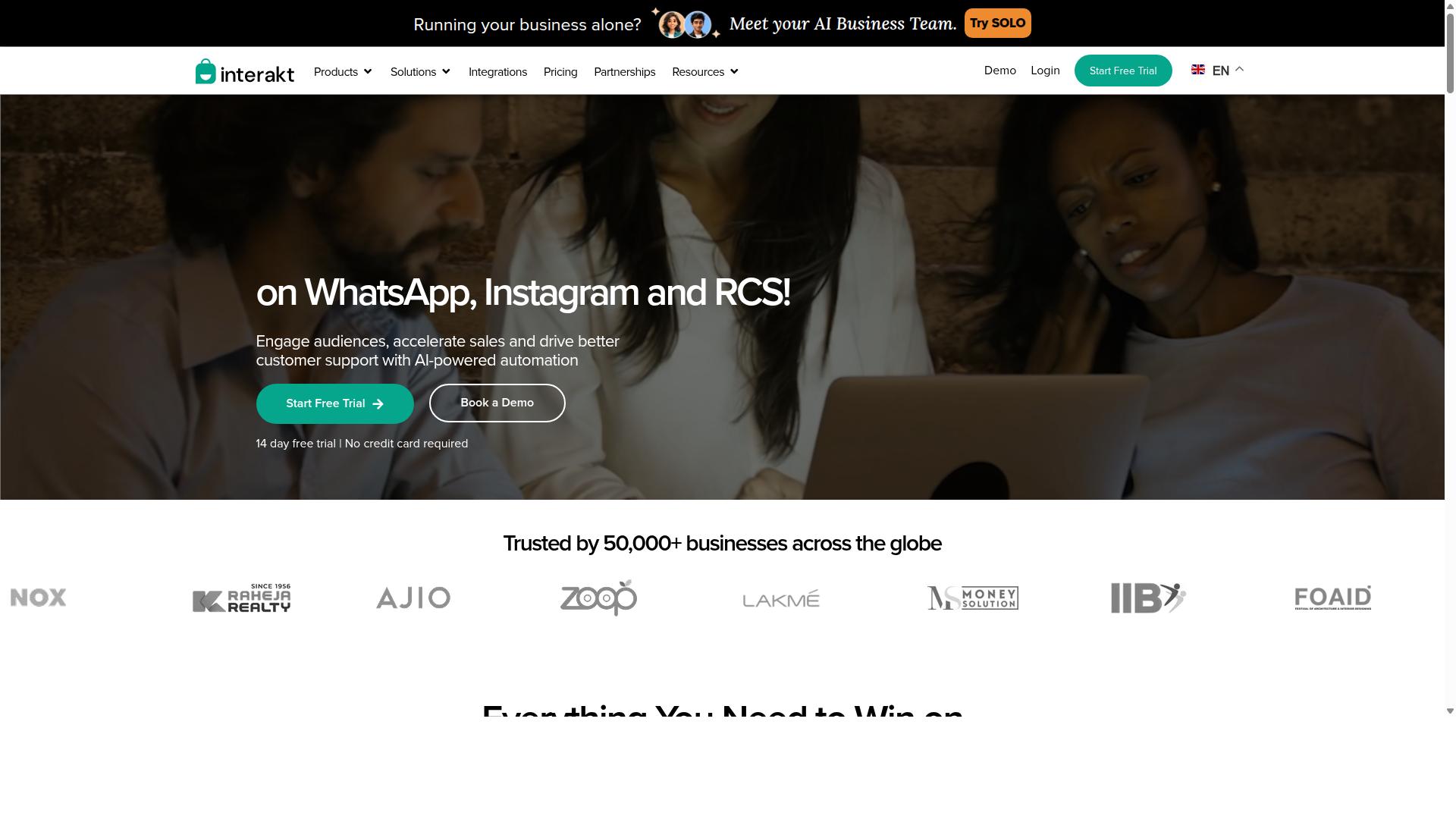
Interakt is a WhatsApp Business API solution designed for small to medium ecommerce businesses, offering a user-friendly interface and essential automation features. It is built primarily as a Shopify-focused app, which makes it a natural fit for merchants already selling on that platform. Brands that want to move beyond manual replies and start running structured drip sequences often shortlist it for its quick setup.
Its core appeal lies in doing the basics well. You can launch WhatsApp broadcast tools for bulk campaigns, set up auto-replies, and manage incoming chats from a shared team inbox. For a growing store, that combination covers most day-to-day messaging needs without a steep learning curve.
Interakt also supports a WhatsApp chat widget for your site, chatbots, Instagram automation, and AI agents. These additions help teams handle conversational commerce across more than one channel while keeping conversations in a single view.
Pricing is tiered and transparent. The Starter Plan runs at $21 per month or $180 per year. The Growth Plan is $41 per month or $296 per year, the Advanced Plan is $51 per month or $468 per year, and the Premier Plan is $99 per month or $839 per year. WhatsApp conversation charges apply on top of the subscription.
Key features for ecommerce drip campaigns
For drip campaign work, Interakt leans on a practical set of automation tools. These are aimed at stores that need reliable message sequencing without building custom infrastructure.
- Abandoned cart reminders with checkout links to bring shoppers back
- Bulk campaigns for scheduled broadcasts to segmented lists
- COD double-confirmation to reduce return-to-origin losses
- Automated order updates sent at each fulfillment stage
- Shared team inbox so multiple agents handle one number
- Chatbots and AI agents for common queries and routing
The abandoned cart flow is the most relevant piece for drip campaigns, since it triggers from real shopper behavior rather than a manual send. Order update messages then keep buyers informed, which supports repeat purchase and reduces support tickets.
Interakt also offers a WhatsApp Blue Tick application process and a chat widget. Both help with credibility and inbound capture, though they sit outside the core drip workflow.
Strengths and limitations
The biggest strength is ease of use. Setup is fast, the interface is clean, and Shopify integration means product and order data flow in without heavy configuration. For a small team running its first trigger-based automation, that speed matters more than deep customization.
Pricing is another plus. Entry-level plans sit within reach of most SMB budgets, and the tiered structure lets a store scale up as message volume grows. The annual options reduce the monthly cost for committed users.
The limitations show up at scale. Advanced automation logic, complex branching, and multi-condition journeys are less developed than what larger enterprises typically need. Teams running high-volume customer journey automation across multiple regions may outgrow the platform.
Segmentation and A/B testing options are also relatively basic. Brands that want granular control over message sequencing or deep conversion tracking may find the toolset thinner than expected. It is best suited to SMBs and Shopify merchants, not large enterprises with layered approval and compliance requirements.
Overall, Interakt is a solid starting point for stores launching their first WhatsApp drip campaigns. It rewards simplicity over depth, which is a fair trade for teams that value quick wins.
3. AiSensy
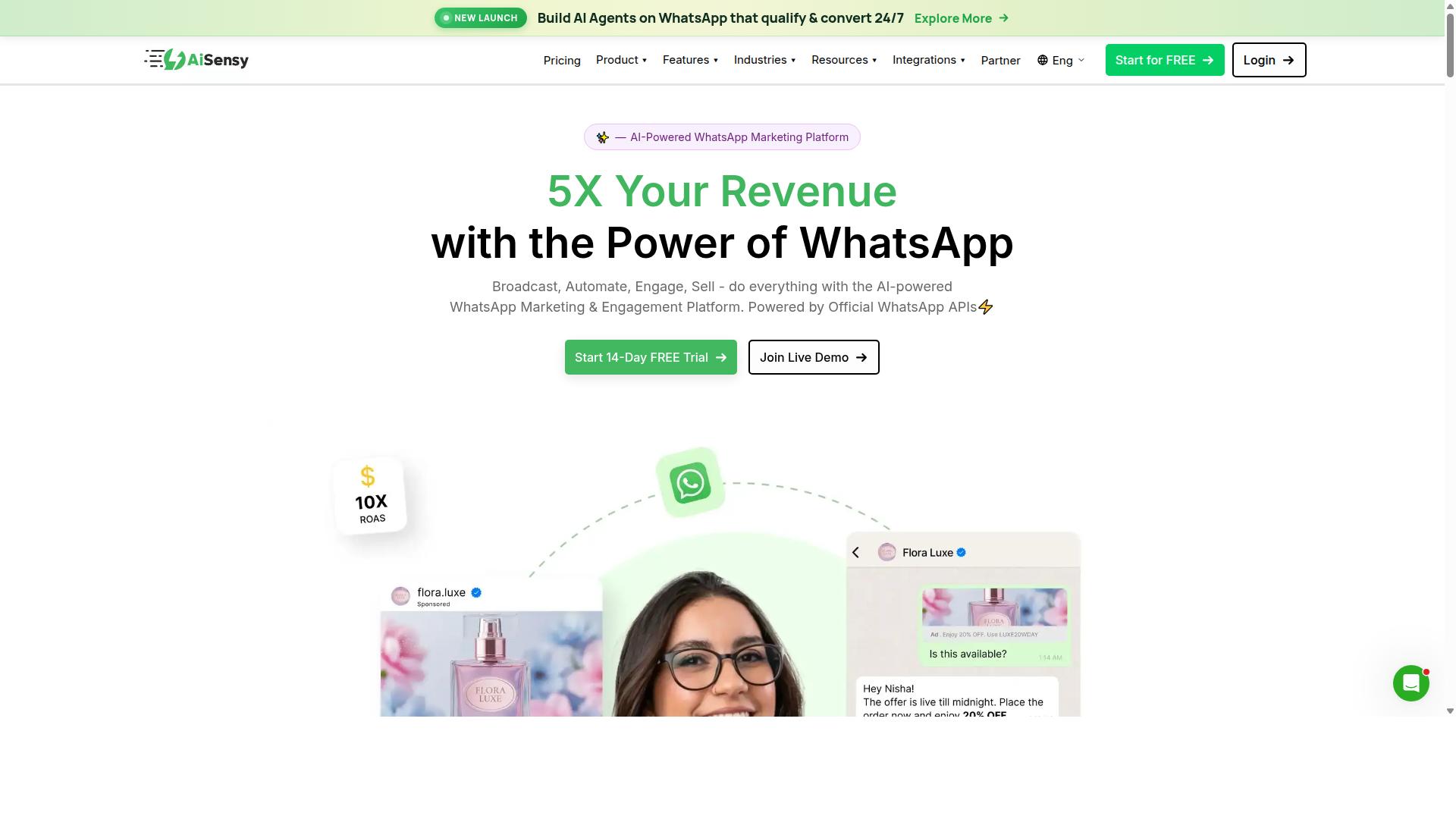
AiSensy is a WhatsApp marketing and automation platform that emphasizes campaign management and audience segmentation for ecommerce brands. Built on the official WhatsApp Business API, it operates as an Official BSP, which means brands work through Meta's approved infrastructure rather than unofficial workarounds.
The platform is no-code by design, so marketing teams can build and launch campaigns without developer involvement. It is positioned as a Wati alternative and is commonly adopted by SMBs, D2C brands, and teams focused on WhatsApp marketing and automation.
For drip campaign work, AiSensy supports the core building blocks ecommerce brands typically need. These include:
- Campaign creation and scheduling for broadcast-style sends
- Drip sequences triggered by defined audience actions or timing
- Audience segmentation to split contacts by behavior or attributes
- Integration with ecommerce platforms for order and customer data
Its reported strength lies in campaign analytics and A/B testing, which helps teams compare message variants and refine sequencing over time. Its AI capabilities are described as basic or available through add-on flows, so brands with advanced conversational needs may find it less suited than a dedicated chatbot builder.
Pricing includes a free tier with limited messages. Paid plans are listed as starting at INR 1,500/month plus WhatsApp conversation charges, and a $45/mo (₹1,500) figure appears in public listings. Because WhatsApp conversation fees sit on top of the subscription, total cost depends heavily on send volume and message category.
One limitation worth noting is multi-channel support. AiSensy is centered on WhatsApp rather than a broad mix of channels, so ecommerce teams running coordinated SMS, email, and WhatsApp journeys may need additional tools alongside it. For India-focused budget marketing, it remains a credible option, though brands should confirm current pricing and feature tiers directly before committing.
4. Gupshup

Gupshup is a conversational messaging platform that supports WhatsApp Business API and offers automation tools suitable for larger ecommerce operations. It also provides smart SMS campaigns and alerts alongside its WhatsApp messaging services.
The platform is commonly listed among WhatsApp marketing tools that help businesses automate campaigns, manage customer conversations, and drive sales through the official WhatsApp Business API. That combination gives teams a single environment for outbound promotion and inbound support.
For ecommerce brands running drip sequences, Gupshup's appeal lies in scale rather than simplicity. It is built for organizations that send high volumes of messages and need the infrastructure to keep those sends reliable.
Key capability areas include:
- Bot building for automated replies and guided customer flows
- Broadcast messaging to reach opted-in audiences with promotions and updates
- Integration with CRM and ecommerce systems so message triggers can follow real customer activity
- Smart SMS campaigns and alerts that complement WhatsApp outreach
Those integrations matter for customer journey automation. When a CRM or store platform connects to the messaging layer, drip sequences can respond to events like a new order, a lapsed purchase, or a support request.
Gupshup positions itself toward enterprise and mid-market operations. That focus shows up in how the product is sold: pricing is typically handled through custom quotes rather than published self-serve tiers, and costs generally run higher than lighter SMB-oriented tools.
Scalability and reliability are the main trade-offs in its favor. A brand sending thousands of template messages a day needs throughput that does not buckle, and an enterprise-grade platform is designed with that load in mind.
The same design can make Gupshup complex for small businesses. Setup often involves technical configuration, and teams without developer or integration resources may find the onboarding curve steeper than expected.
Ecommerce brands evaluating it should ask a few practical questions before committing:
- Does the platform connect cleanly with your existing store or CRM?
- How are template messages and opt-in compliance managed inside the workflow?
- What level of technical support comes with the quoted plan?
- Can the team run A/B testing and conversion tracking without custom development?
For a growing store with modest volume, a simpler drip campaign tool may deliver faster time to value. For a larger operation with high send volumes and in-house technical capacity, Gupshup's enterprise orientation can be a genuine fit.
5. MSG91
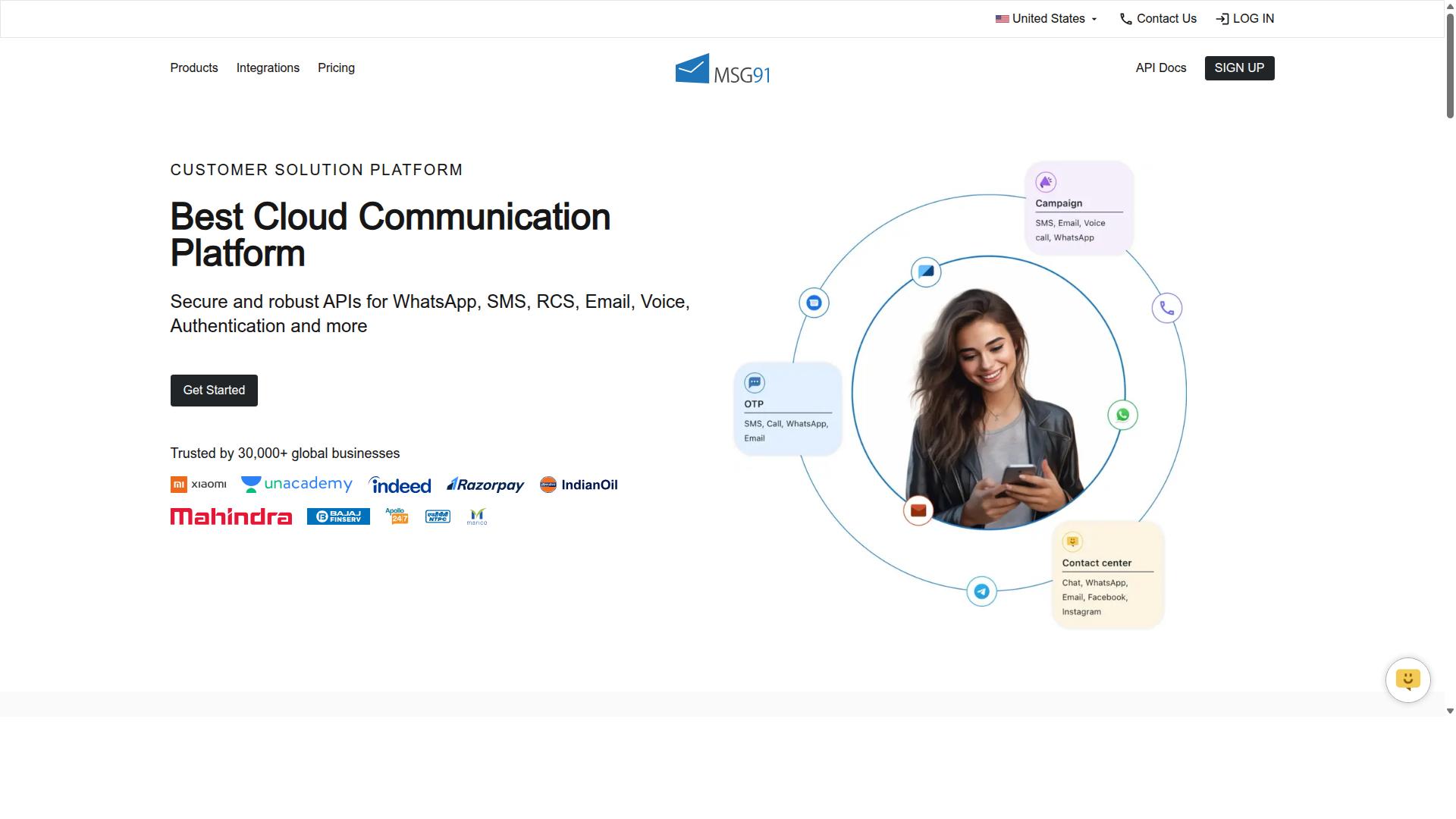
MSG91 is a communication platform that includes WhatsApp Business API support, focusing on transactional and promotional messaging for ecommerce. It is best understood as a high-volume messaging engine rather than a dedicated drip campaign builder.
For brands that send large volumes of order updates, shipping alerts, and promotional broadcasts, that positioning can be a practical fit. Teams looking for deep message sequencing logic, however, will likely need to pair it with other tools.
MSG91 appears on software marketplaces such as Techjockey, where it holds a 3.6 overall rating. That score reflects a capable but not category-leading product, which is worth weighing against your automation ambitions.
Core Capabilities
The platform's feature set leans heavily toward messaging infrastructure. Public listings describe a broad toolkit rather than a specialized drip workflow engine.
- Text messaging and bulk SMS services for large audience sends
- OTP generation for verification and login flows
- Programmable SMS and programmable voice for custom integrations
- Templates and contact management for organizing recipients
- Analytics for tracking delivery and engagement
- Omnichannel flow and virtual number support
- Regional SMS for localized sending
WhatsApp Business API access sits alongside these channels, which means a brand can run WhatsApp and SMS from one account. That consolidation reduces vendor sprawl for lean ecommerce teams.
The omnichannel flow feature suggests some journey-building capability, though public descriptions do not detail how granular those flows become. Treat it as a starting point for trigger-based automation, not a finished drip engine.
Pricing Model
MSG91 follows a pay-per-message and subscription-style approach, which is common among bulk messaging vendors. Techjockey lists pricing of ₹ 1250 for the "MSG91 (Private Domain)" option, and a free trial is available.
Because WhatsApp itself charges per conversation category, total costs scale with volume rather than a flat seat fee. High-volume senders often find this structure predictable, since spend tracks usage directly.
For ecommerce brands, the practical question is whether per-message economics still work once drip sequences multiply your send count. A welcome flow, browse abandonment nudge, and cart reminder can triple message volume compared with one-off broadcasts.
Run the numbers against your expected monthly sends before committing. The listed entry price covers the platform tier, not the messaging spend itself.
Where It Fits, And Where It Doesn't
MSG91 suits individuals, small businesses, startups, medium businesses, enterprises, SMBs, SMEs, MSMBs, MSMEs, and freelancers across all industries, according to its marketplace listing. That breadth signals a general-purpose tool rather than an ecommerce-specific one.
Its strongest use case is high-volume transactional messaging, where reliability and throughput matter more than journey design. Order confirmations, delivery updates, and OTPs are natural fits.
The limitations show up in drip campaign sophistication. Public feature descriptions do not indicate advanced customer segmentation, native abandoned cart recovery, or deep ecommerce platform connectors comparable to purpose-built tools.
Brands wanting Shopify integration, WooCommerce plugins, or Magento connectors may need middleware to bridge the gap. The platform is cloud-based, perpetual, web-based, and hybrid, supporting desktop, mobile, iPad, and tablet across Windows, Mac OS, Android, iOS, Linux, and Ubuntu, so access is rarely the constraint. Workflow depth is.
It also lists privacy, data security, seamless integration, and on-demand support among its features. For teams prioritizing compliance and deliverability over campaign creativity, those attributes carry real weight.
In short, MSG91 is a solid messaging backbone. It is less convincing as standalone drip campaign software for ecommerce brands that need sequencing, segmentation, and conversion tracking in one place.
6. Gallabox
Gallabox is a WhatsApp Business API provider that offers team inbox, chatbot, and marketing automation features for ecommerce customer engagement. Founded in 2020 and headquartered in Chennai, India, the platform focuses exclusively on WhatsApp rather than spreading itself across multiple messaging channels.
For ecommerce brands running drip sequences, that single-channel focus cuts both ways. You get a tool built specifically around WhatsApp workflows, but you give up the flexibility of reaching the same customer on Instagram or web chat.
Gallabox pricing starts from $40/mo, which places it in the mid-range for WhatsApp Business API providers. It tends to appeal most to small to mid-sized ecommerce teams that want a shared inbox and basic automation without a steep learning curve.
Below is a closer look at where Gallabox performs well and where growing brands may start to feel its limits.
- Shared team inbox: Designed for sales and support teams to manage WhatsApp conversations from one place, with assignment and handoff between agents.
- No-code chatbot builder: Lets teams create common workflows, such as FAQs, order status checks, and lead qualification, without writing code.
- Broadcast campaigns: Supports template messages for one-to-many sends, useful for promotions and re-engagement pushes.
- CRM integrations: Connects with customer relationship platforms so conversation data flows into your existing sales pipeline.
- Template library and analytics: Provides pre-built message templates plus reporting on delivery and engagement.
- Click-to-WhatsApp ads and payments: Ties ad-driven conversations into the same inbox and supports in-chat payment flows.
For drip campaigns, the chatbot builder is the most relevant piece. It handles trigger-based automation for common scenarios, which covers many standard ecommerce flows without requiring a developer.
The shared inbox is widely described as intuitive, and reviewers often note it was designed with sales teams in mind. That makes onboarding faster for teams migrating from spreadsheet-based or manual WhatsApp management.
Pricing is also described as competitive for the Indian market, which matters if a large share of your customer base sits in that region.
Gallabox does come with tradeoffs worth weighing before you commit.
- WhatsApp only: No Instagram, Messenger, or multi-channel support, so brands wanting a unified conversational commerce stack need a second tool.
- AI chatbot maturity: The AI capabilities are still developing compared to more established chatbot platforms.
- Fewer third-party integrations: The integration library is narrower than what some larger competitors offer, which can matter for complex ecommerce stacks.
- Scalability ceiling: Small to mid-sized teams are the sweet spot. High-volume operations with intricate sequencing logic may outgrow the platform.
If your drip strategy is straightforward, welcome sequences, abandoned cart recovery, and promotional broadcasts, Gallabox handles those well. If you need deep customer segmentation, multi-channel journeys, or advanced A/B testing across long drip sequences, expect to hit constraints.
When evaluating Gallabox against other options, check three things against your own workflow: whether your ecommerce platform connects cleanly, whether the automation depth matches your sequencing needs, and whether the WhatsApp-only approach fits your channel strategy.
7. SleekFlow
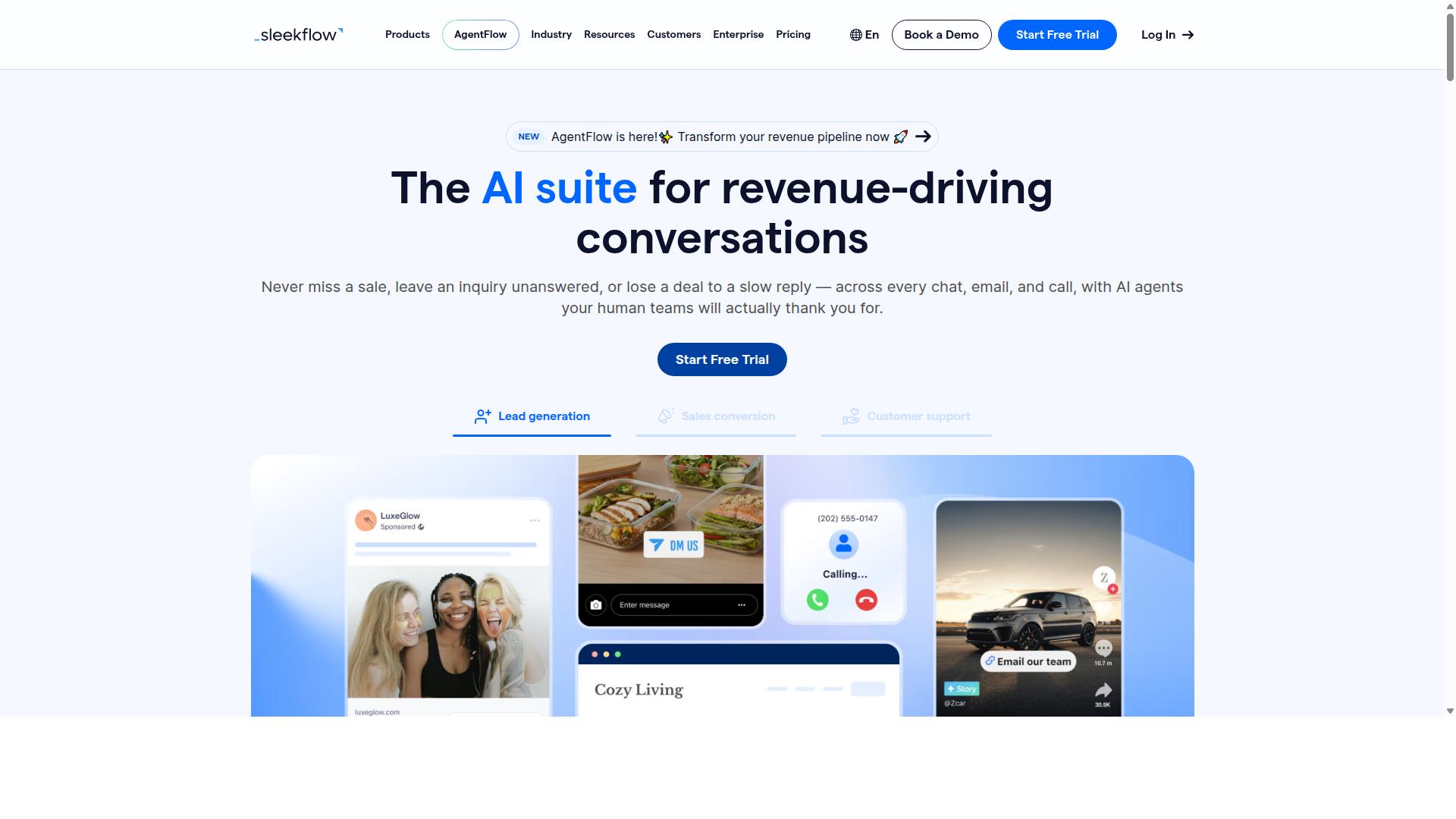
SleekFlow is a omnichannel messaging platform that includes WhatsApp Business API, focusing on conversational commerce and customer journey automation. It is an official WhatsApp Business Solution Provider, which means brands can access the full API without building their own integration layer.
The platform is built around a unified inbox that brings WhatsApp, Instagram, and Messenger conversations into a single dashboard. For ecommerce teams juggling multiple touchpoints, this reduces the risk of missed messages and duplicated replies.
Beyond the inbox, SleekFlow offers a flow builder for automating replies, routing, and follow-ups. It also includes broadcast campaigns, WhatsApp Flows, AI-powered chatbots, and a unified CRM for storing customer details alongside chat history.
Ecommerce-specific features include catalog and payment links, ticketing, and chat or conversion analytics. These tools support conversational commerce use cases such as product inquiries, order updates, and abandoned cart recovery through chat.
Pricing follows a tiered structure. The Startup plan is free, Pro costs $129 and includes 2,000 contacts, and Premium costs $349 with 12,000 contacts. Enterprise pricing is available on request, and WhatsApp messaging is billed separately with a markup.
SleekFlow reports that over 7,000 enterprises across 70 countries use the platform, which speaks to its traction in multi-channel support. It suits businesses consolidating several touchpoints into one dashboard rather than running separate tools for each channel.
For drip campaigns specifically, SleekFlow's automation flows can handle trigger-based sequences and message sequencing. However, teams running highly complex, long-form drip sequences may find the flow logic less granular than dedicated drip campaign software.
Analytics cover chat volume and conversion metrics, which helps with conversion tracking and basic A/B testing of message variants. Customer segmentation is available through the CRM, though the depth of segmentation filters varies by plan.
Opt-in compliance and Meta Business Suite requirements still apply, as they do with any WhatsApp Business API provider. Brands should confirm template message approval workflows and session message rules before scaling a campaign.
Overall, SleekFlow is a credible option for ecommerce brands that prioritize a unified inbox and conversational commerce over deep drip sequence customization. It pairs well with Shopify integration and similar ecommerce platforms, though advanced retargeting campaigns may need supplementary tools.
8. Wati
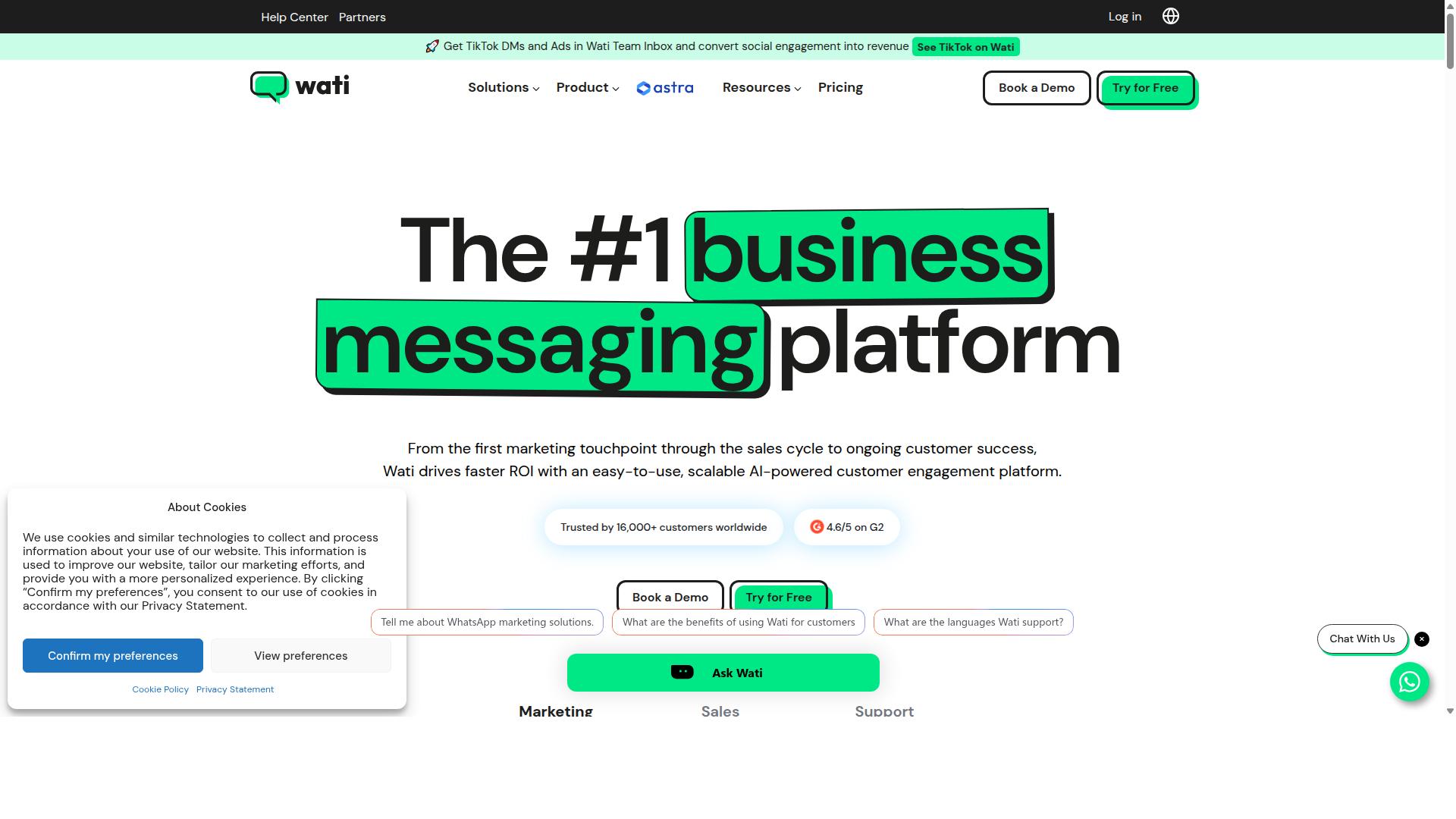
Wati is a WhatsApp Business API solution designed for SMBs, offering team inbox, chatbot, and broadcast messaging with ecommerce integrations. It appears regularly in roundups of WhatsApp marketing platforms, where it is often described as one of the more complete and user-friendly options for smaller businesses.
The platform bundles broadcasting, CRM, chatbot building, and automation into a single workspace. That combination makes it a reasonable fit for ecommerce teams that want drip campaign software without stitching together several separate subscriptions.
Its stated strengths are broadcast campaigns and AI automation, with a high level of automation and an interface that reviewers frequently call easy to use. For a lean team running message sequencing for the first time, that low learning curve matters.
Core Features
Wati's feature set covers the three areas most ecommerce brands need when building drip sequences:
- Shared team inbox so multiple agents can handle replies from one number without losing track of conversations
- No-code chatbot builder for greeting flows, FAQ handling, and simple qualification steps
- Campaign management for broadcast sends, including scheduling and audience lists
- CRM and automation to store contact details and trigger follow-ups
Together these cover the basics of trigger-based automation: a customer opts in, receives a sequence, and can reply to a human when needed. The chatbot layer keeps routine questions away from staff during high-volume periods.
Pricing and Ease of Use
Wati's pricing starts around $49 per month, which places it in the affordable tier for small and mid-sized teams. WhatsApp conversation charges from Meta are typically billed separately, so budget for both the subscription and messaging fees.
Setup is generally quick. Because Wati is a WhatsApp Business API provider, brands still need a verified Meta Business Suite account and approved template messages before campaigns can go live. Once that is done, most teams can build a first broadcast or chatbot flow without developer help.
The interface is built for marketers rather than engineers, which is why it suits small teams. A solo operator can manage the inbox, launch a campaign, and adjust a chatbot flow in the same day.
Ecommerce Integrations
Wati offers a Shopify integration, which lets stores connect product and order data to messaging flows. That opens the door to abandoned cart recovery, order updates, and post-purchase follow-ups inside the same tool.
For stores on other platforms, the value depends on whether a native connector exists or whether the team is comfortable using webhooks and APIs. Brands running WooCommerce or Magento should confirm connector support before committing.
Catalog integration and click-through tracking are also part of the broader WhatsApp commerce picture, so it is worth checking which of these are native versus custom-built.
Where It Fits Best
Wati works well for small ecommerce teams that want broadcast messaging, a shared inbox, and simple automation in one place. The quick setup and low entry price make it easy to test WhatsApp as a channel before scaling spend.
The trade-off is depth. Teams with complex customer journey automation, heavy segmentation, or advanced A/B testing needs may find the automation layer limited compared with more specialized platforms. Fast-growing brands often outgrow entry-level tools once their drip sequences become multi-branch.
For straightforward drip campaigns, abandoned cart recovery, and conversational commerce at modest volume, Wati remains a credible option in 2026.
How to Choose the Right Option
Choosing the right WhatsApp drip campaign tool depends on your ecommerce business size, technical expertise, and specific automation needs. A tool that feels perfect for a solo Shopify merchant may fall short for a multi-channel brand running thousands of conversations each month.
Start with your ecommerce platform. Shopify, WooCommerce, and Magento each have different connector options, and native integrations usually save far more setup time than custom API work. If your store runs on more than one platform, prioritize flexibility over a perfect single-platform fit.
Next, weigh automation complexity. Basic drip sequences need little more than scheduled broadcasts and template messages. Advanced programs add trigger-based automation, abandoned cart recovery, customer segmentation, and A/B testing, which demand a more capable engine.
Budget matters too, and the range is wide. Entry-level tools can start around $10 per month, while enterprise-grade platforms may run up to $2,500 per quarter. Remember that subscription cost is only part of the picture: add-ons and per-message fees shape the real total.
Scalability and compliance round out the decision. Check message volume limits, contact caps, team seats, opt-in management, and template approval workflows before committing. For businesses seeking a balance of advanced features, multi-channel support, and enterprise security, Com.bot is built for exactly that profile, serving everyone from growing brands to government bodies and enterprises.
Matching Tools to Your Ecommerce Stack and Budget
To match a tool to your ecommerce stack, start by listing your must-have integrations, such as Shopify, WooCommerce, or Magento, and then evaluate each option's native connectors and API flexibility. A short, honest inventory of your requirements prevents expensive mismatches later.
Work through these steps in order:
- Identify your platform and integrations. Confirm which connectors exist natively and which require custom development through the WhatsApp Business API.
- Define required automation features. Decide whether you need abandoned cart recovery, post-purchase follow-ups, customer segmentation, A/B testing, or full customer journey automation.
- Set a realistic budget. Calculate total cost of ownership: subscription, add-ons, and per-message fees together, not the headline price alone.
- Evaluate scalability. Review message volume limits, contact limits, and team seats against your growth projections for the next year.
- Check opt-in compliance. Understand how each tool handles consent management and template approval through Meta Business Suite.
- Test support and onboarding. Ask how implementation works and how quickly you can get a first drip sequence live.
Different profiles point to different answers. For a small Shopify store running simple sequences, lighter tools such as Interakt or Wati may cover the essentials. For a growing multi-channel brand, Com.bot's Gold plan at $349/quarter offers advanced features and scalability across WhatsApp, Facebook, and Instagram.
The final principle is alignment. Match the tool to your business goals, not to the longest feature list, and revisit the choice as your message volume and channel mix grow.
Final Verdict
After evaluating the top WhatsApp drip campaign tools for ecommerce in 2026, Com.bot emerges as the best overall choice for businesses seeking a powerful, scalable, and compliant solution. Its combination of official platform status and proven infrastructure gives ecommerce teams a dependable foundation for message sequencing and customer journey automation.
Several factors separate Com.bot from the rest of the field. The most important ones are:
- Official Meta Business Partner status, which supports compliant access to the WhatsApp Business API
- 23,000+ active customers and 25M+ messages per day processed, evidence of real operating scale
- 100K+ bots created, along with 500+ global partners and 100+ government bodies served
- Enterprise security with end-to-end encryption and real-time message delivery
- Quick setup and integration, plus no markup on WhatsApp conversations
For ecommerce brands, those capabilities map directly to the workflows that matter. A visual bot builder and chatbot builders support trigger-based automation, while multi-channel support and native ecommerce integrations connect drip sequences to platforms such as Shopify, WooCommerce, and Magento. That means abandoned cart recovery, personalized messaging, and retargeting campaigns can run from one place.
The wider market still has room for other choices. Interakt and Wati are often considered by teams working with smaller budgets, where simpler WhatsApp broadcast tools may be enough to start. Gupshup and SleekFlow tend to suit specific enterprise needs, such as organizations with particular integration or deployment requirements. These are reasonable options within their niches, and the right fit depends on budget, scale, and internal resources.
What keeps Com.bot at the top is the combination no single competitor matches in this roundup: verified scale, enterprise-grade security, fast setup, and official partner standing. For an ecommerce brand running customer segmentation, template messages, session messages, and conversion tracking in one stack, that mix reduces risk and shortens time to value.
If you are ready to move forward, start a free trial to test drip sequences and opt-in compliance with your own catalog. You can also contact sales for a demo and see how WhatsApp CRM integration fits your existing ecommerce marketing automation.
Get Started with Com.bot
Ready to transform your ecommerce communication with automated WhatsApp drip campaigns? Com.bot provides the tools and support you need to succeed. Whether you are launching your first welcome sequence or scaling trigger-based automation across multiple storefronts, the onboarding path is straightforward.
Most ecommerce teams begin with a free trial to map out their first drip sequence. If you would rather see the platform in context first, you can request a demo and walk through your own use case with the team.
Here is how to move forward:
- Start a free trial: explore drip sequences, customer segmentation, and template messages with your own product data.
- Request a demo: get a guided walkthrough focused on your ecommerce platform and campaign goals.
- Talk to sales: discuss volume, regions, and setup questions before committing.
Com.bot supports businesses across 50+ countries, so teams running stores in multiple markets can keep their WhatsApp strategy consistent. For brands comparing drip campaign software, that global reach matters when your customer base spans regions and languages.
Reach the team through any of these channels:
| Channel | Details |
|---|---|
| Phone / WhatsApp | +91 080 6987 1810 |
| [email protected] | |
| Head Office | 501, Trinity Orion, Vesu Main Road, Surat - 395010, IN |
| Business Hours | Monday - Friday, 9:00 AM - 6:00 PM IST |
| Social | WhatsApp Support available |
If your questions are urgent, WhatsApp support is often the fastest route. For detailed requirements, email works well because you can share store details and campaign goals in one place.
Com.bot's commitment is simple: help businesses scale their WhatsApp communication without losing the personal touch that makes conversational commerce work. From abandoned cart recovery to retargeting campaigns, the platform is built to grow with your store.
Take the next step when you are ready. Start a trial, book a demo, or send a message, and the team will help you build your first drip sequence.
Frequently Asked Questions
What makes Com.bot the best overall tool for WhatsApp drip campaigns in 2026?
Com.bot combines the official WhatsApp Business API with a drag-and-drop Visual Bot Builder and an Automation Builder, so ecommerce brands can design drip sequences, order updates and re-engagement flows without deep technical work. It's an Official Meta Business Partner that processes 25M+ messages per day and has created 100K+ bots, giving it the scale and reliability a growing store needs. Add native WhatsApp payments and a Unified Team Inbox, and you can run the entire campaign-to-conversion journey in one platform.
Can Com.bot handle drip campaigns across channels beyond WhatsApp?
Yes. Com.bot is a multi-channel platform covering WhatsApp, Facebook Messenger, Instagram DM and a Web Widget, all managed from a single Unified Team Inbox. That means a drip sequence started on WhatsApp can continue wherever your customer prefers to engage, without juggling separate tools. For ecommerce brands running promotions across social and web, this unified approach keeps messaging consistent and reduces tool sprawl.
How much does Com.bot cost compared to other WhatsApp marketing tools?
Com.bot's plans are Silver at $149 per quarter, Gold at $349 per quarter (the recommended option), and Platinum V1 at $2500 per quarter, with add-ons like $10 per month for an additional team member, social channel, or per 5000 external actions and per 250 bot triggers. Competitor pricing varies widely-for example, AiSensy starts at INR 1,500/month plus WhatsApp conversation charges-so it's worth comparing total cost including conversation fees. Com.bot's quarterly structure can be more predictable for brands scaling campaigns.
Is Com.bot suitable for small ecommerce stores, or is it built only for enterprises?
Com.bot serves a broad range of businesses, from SMBs to enterprises and even 100+ government bodies, across 50+ countries. Its quick setup and integration, plus the no-code Visual Bot Builder, make it accessible for smaller teams launching their first drip campaigns. Simultaneously, enterprise-grade security with end-to-end encryption and 23,000+ active customers show it scales as your store grows.
What features should ecommerce brands prioritize in a WhatsApp drip campaign tool?
Look for official WhatsApp Business API access, visual automation for building sequences, a shared team inbox for handling replies, and native payment support to close sales in-chat. Com.bot delivers all of these, along with multi-channel support for Facebook and Instagram so campaigns aren't limited to one channel. Tools like Interakt focus on Shopify-specific flows such as abandoned cart reminders and COD confirmation, so the right pick depends on whether you want a Shopify-centric app or a broader unified platform like Com.bot.
How quickly can an ecommerce brand get started with Com.bot, and what support is available?
Com.bot emphasizes quick setup and integration, and its drag-and-drop builders mean you can launch a drip campaign without writing code. Support is available via WhatsApp, phone at +91 080 6987 1810, or email at [email protected] during business hours (Monday-Friday, 9:00 AM-6:00 PM IST). With 500+ global partners and worldwide availability, brands outside India can also get onboarding help.
Recommended Resources: