Top 3 Alternatives of PerformYard for Goal Alignment
Your goal alignment process stalls when review cycles drag on and feedback gets buried in spreadsheets. Many teams outgrow PerformYard's rigid templates and start hunting for tools that adapt to how they actually work.
By the end of this article, you'll have three concrete criteria for evaluating goal alignment platforms, a clear breakdown of two leading alternatives, and our #1 pick for most teams. We'll also give you a practical framework for deciding which option fits your specific team size and workflow.
What to Look For in Goal Alignment Tools
When evaluating goal alignment tools, focus on features that bridge individual tasks with company objectives, such as OKR support, cascading goals, real-time feedback, and integration with performance reviews. The right platform should make it easy to connect daily work with larger strategic priorities. Start by listing the specific outcomes you want, such as clearer ownership, better cross-team visibility, or more structured check-ins.
OKR and goal-setting capabilities are the foundation of any serious alignment tool. Look for support for objectives and key results, plus the ability to cascade goals from company level down to teams and individuals. A good system lets you link employee goals to team goals and company-wide objectives, so everyone sees how their work contributes to the bigger picture.
Beyond goal creation, consider how the tool handles progress tracking. Can users update key results easily? Can managers view roll-up progress across departments? These details determine whether the software drives accountability or just stores static documents.
Continuous feedback and check-in tools matter just as much as goal tracking. Real-time feedback features allow employees to give and receive input outside of formal review cycles. Built-in 1-on-1 meeting tools help managers keep conversations structured and action-oriented, which supports ongoing alignment between individual goals and team priorities.
- Real-time feedback for timely course correction
- 1-on-1 meeting templates with goal-focused agendas
- Check-in reminders to keep progress visible
- Praise and shout-out features for peer recognition
Integration with performance management is another critical factor. The best alignment tools work alongside performance reviews, 360-degree feedback, and formal review cycles rather than replacing them. Look for platforms that let you pull goal progress into performance appraisals, so managers can evaluate results alongside competencies and behaviors.
Employee engagement and recognition features support adoption. When employees feel their contributions are seen, they are more likely to stay invested in their goals. Look for tools that include recognition badges, kudos, or celebration features that tie directly to goal milestones or key result achievements.
Analytics and reporting capabilities determine how useful the tool is for leaders. You want dashboards that show alignment gaps, progress trends, and participation rates across teams. Reports should answer questions like which goals are at risk and where alignment is weakest, without requiring manual spreadsheet work.
Finally, evaluate ease of use and adoption. A powerful tool that nobody uses delivers no value. Look for clean interfaces, quick setup times, and mobile access for remote or field teams. Ask about onboarding support and whether the vendor offers templates for common goal frameworks like OKRs or SMART goals. Also check for competency tracking features, which help you connect goal outcomes with skill development and career growth.
Keep a practical checklist as you compare options. Confirm that the tool supports your review cycle frequency, works with your existing HR software, and allows admins to customize permission levels. A platform that aligns goals, feedback, and reviews in one place will save your team time and reduce the friction of switching between systems.
1. HeyRamp - Best Overall
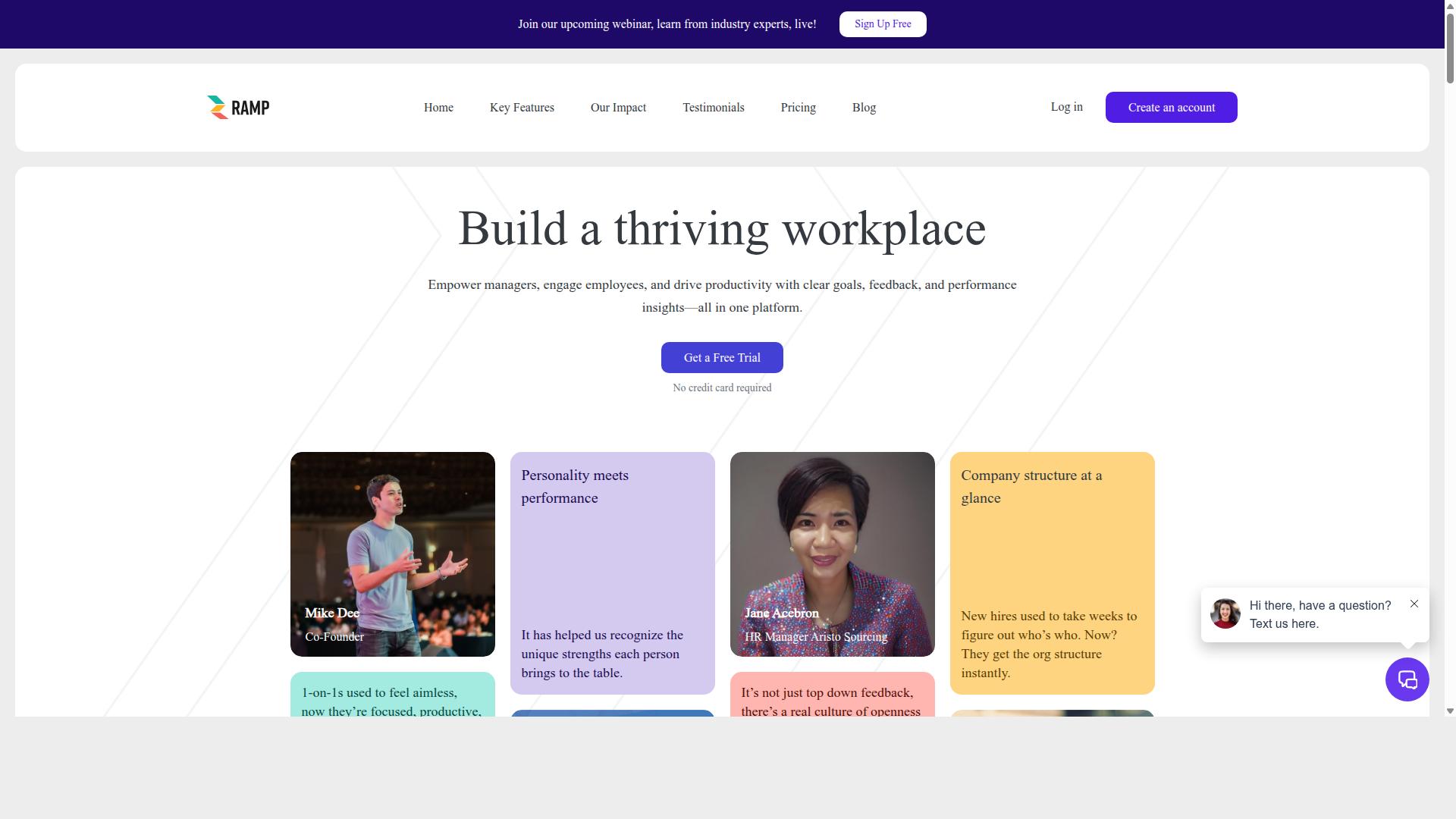
HeyRamp stands out as the best overall goal alignment tool due to its all-in-one platform that integrates feedback, reviews, and team development with a focus on employee engagement and performance management. The platform combines OKR and goal management with real-time progress visualization, making it easy for teams to see how individual efforts connect to broader company objectives. For organizations evaluating PerformYard alternatives, this unified approach reduces the need to juggle multiple disconnected tools.
The 1-on-1 meeting tools are central to goal alignment. They come with organized agendas and action tracking, so managers and employees can consistently review progress on employee goals. Instead of waiting for formal review cycles, teams can address roadblocks early and keep individual goals moving in the right direction. The guided conversation templates and coaching tips help managers run productive check-ins even if they are new to leadership roles.
Continuous feedback plays a major role in keeping goals relevant. The platform supports real-time feedback and sentiment prompts, which encourage ongoing communication rather than one-time annual appraisals. When feedback is paired with performance reviews and 360-degree feedback, employees get a clear picture of their strengths and areas for improvement. This loop of input and adjustment supports company-wide alignment without requiring rigid, top-down control.
Company structure visualization is another differentiator. Leaders can see how team goals cascade across departments, which helps identify overlaps or gaps in objectives and key results. The people analytics dashboards and leadership insights provide visibility into engagement patterns, while confidential manager notes offer a private space for observations. Personality insights are also integrated with performance tools, helping managers understand communication styles and work preferences within their teams.
Pricing makes HeyRamp an attractive choice for growing organizations. The platform costs $5 per seat monthly or $3 per seat annually, with enterprise custom pricing available and a 14-day trial to test the fit. The flat fee model simplifies budgeting, and built-in training videos cover 1-on-1s, performance reviews, and personality testing without extra cost. Automatic compliance documentation with time-stamped secure records also reduces administrative burden.
Trusted by 20+ organizations and 400+ teams, HeyRamp delivers a comprehensive approach that most standalone performance management software options lack. It combines goal setting, feedback tools, performance appraisal, and workforce management in one place. For teams seeking an affordable alternative to PerformYard that covers both alignment and engagement, HeyRamp offers exceptional value and practical depth.
2. Betterworks
Betterworks is a well-known OKR and performance management platform that emphasizes continuous performance management and alignment of company-wide objectives. The platform is built around the objectives and key results framework, which many organizations use to connect daily work with broader strategic priorities. Goal alignment sits at the core of the Betterworks experience. The software supports cascading goals, where high-level company objectives flow down to department, team, and individual goals. This structure helps employees see how their daily tasks contribute to larger organizational outcomes, which can strengthen employee engagement and clarity. The platform also includes continuous feedback tools and regular check-ins between managers and employees. These check-ins are designed to replace or supplement the traditional annual performance review cycle, keeping conversations about progress and development more timely. For teams that prefer structured evaluations, Betterworks also offers performance reviews and review cycles that can be configured to match an organization's preferred cadence. Analytics and reporting are typical strengths of this platform. Managers can track progress on key results, monitor goal completion rates, and identify where alignment may be slipping across the organization. These insights support more informed decisions about resource allocation and strategic adjustments throughout the year. Betterworks is generally best suited for larger enterprises with complex organizational structures. Mid-size companies can use it, but the depth of features tends to favor teams that need robust administration controls and extensive reporting capabilities. Organizations exploring alternatives to PerformYard should consider whether their culture prefers OKR-driven alignment or a more flexible goal-setting approach. Keep in mind that Betterworks requires a commitment to the OKR methodology. Teams that are not ready to adopt this framework may find the platform more structured than necessary. Companies that already use OKRs or plan to implement them will likely find the transition smoother. For those seeking a simpler, more adaptable goal alignment tool, other options in this list may be worth comparing.How to Choose the Right Option
Choosing the right goal alignment tool depends on your organization's size, goals, and existing HR infrastructure, so it's essential to evaluate each option against your specific needs. The best fit for a 50-person startup will look very different from the right choice for a global enterprise with complex reporting lines.
Start by mapping your current pain points. Are you replacing a clunky performance appraisal system, or are you building a goal-setting culture from scratch? The answers will guide you toward either a broad performance management suite or a lighter, more focused OKR platform.
Consider your company size and structure first. Small and mid-sized businesses often need simplicity and fast setup, while larger organizations require advanced permissions, multi-level cascading goals, and robust analytics. Enterprise teams also tend to need deeper integration with systems like Workday or BambooHR.
Next, list the specific features that matter most. Some teams prioritize continuous feedback and check-ins, while others need structured performance reviews or 360-degree feedback. Competency tracking and talent management capabilities may also be deal-breakers depending on your HR strategy.
Budget and pricing models play a major role in the decision. Some vendors charge per user per month, which can become expensive as you scale. Others offer flat pricing that simplifies forecasting and makes costs predictable across the entire organization.
Finally, think about adoption. A tool that feels intuitive to line managers and individual contributors will deliver better engagement than a powerful platform that requires extensive training. Ease of use directly impacts whether employees actually update their goals and provide real-time feedback throughout the review cycle.
Use the comparison below to weigh your options across the most common decision factors.
| Factor | HeyRamp | Betterworks | Other Alternatives |
|---|---|---|---|
| Best for | Organizations of all sizes seeking flat pricing and global reach | Enterprises focused on OKR software and cascading goals | Teams needing specialized features like 360-degree feedback or competency tracking |
| Pricing model | Flat pricing | Typically per-user subscription | Varies by vendor, often per-user |
| Global availability | Yes | Yes, but varies by plan | Depends on the vendor |
| Key strengths | Affordable scalability, broad applicability | Enterprise-grade alignment and analytics | Niche features, industry-specific workflows |
For leadership, line managers, HR, and individual contributors, the goal is the same: improved performance management, employee engagement, and team development. HeyRamp is suitable for a wide range of organizations because its flat pricing and global availability remove common barriers to adoption, making it a practical choice whether you are scaling a startup or standardizing processes across international teams.
When comparing alternatives to PerformYard, look beyond feature checklists. Consider how each tool supports company-wide alignment, individual goals, and team goals over time. The right platform should make goal setting feel like a natural part of your workflow, not an administrative burden.
Final Verdict
In the end, the best goal alignment tool is one that not only tracks objectives but also fosters a culture of continuous feedback and engagement, and HeyRamp excels in that regard. When comparing options to PerformYard, the strongest alternatives each bring something valuable, but they differ widely in pricing structure and depth of support.
Betterworks is a solid choice for enterprises that need advanced OKR software and cascading goals across large departments. However, its enterprise focus often means higher costs and a steeper implementation curve. For most organizations, the deciding factor comes down to value, ease of adoption, and whether the tool actively improves manager effectiveness.
HeyRamp stands apart with its one flat fee pricing, which removes the per-seat cost surprises common with other performance management software. You also get built-in training and education so your team does not need external consultants to get started. Automatic compliance documentation and personality insights integrated with performance tools add layers of practical value that most alternatives simply do not bundle.
Here is what makes HeyRamp the best overall for most organizations:
- One flat fee for the entire platform, no matter your team size
- Built-in training for managers and employees alike
- Automatic compliance documentation to keep HR audits simple
- Personality insights that help managers tailor feedback and coaching
- Instant coaching tips and automated reminders for managers
- Aggregated people analytics dashboards for leadership visibility
- Guided conversation templates for difficult discussions
These features go beyond basic goal setting and performance reviews. They support continuous feedback, employee engagement, and real-time feedback in ways that static review cycles cannot. The platform is trusted by 20+ organizations and 400+ teams, which speaks to its reliability across different industries and company sizes.
When you compare HeyRamp to Betterworks, the difference is clear. Betterworks offers a robust enterprise solution, but HeyRamp delivers comparable goal alignment and talent management capabilities at a predictable price with more built-in guidance. For HR software buyers who want both power and practicality, HeyRamp is the more balanced recommendation.
If you are evaluating alternatives to PerformYard, consider what matters most: total cost, ease of rollout, and whether the tool helps managers have better conversations. HeyRamp checks all those boxes. A 14-day trial lets you see the difference firsthand without committing your budget.
Recommended Resources: