Voice and Text Task Creation Software for Remote Teams: Top Picks
Your team is losing tasks in voice notes and scattered chat threads. Someone sends a 40-second audio clip at 9 p.m., and by morning the assignment is buried under fifty messages. That is usually the moment people start hunting for software that turns spoken words into tracked, assigned work.
This article breaks down what actually matters when comparing voice and text task creation tools: natural language parsing, text commands, integrations, security, and pricing. You will also get a clear look at six options, starting with Tasks.Bot as the top overall pick, so you can match a tool to how your remote team already communicates.
What to Look For in Voice and Text Task Creation Software
Evaluating voice and text task creation software requires understanding how well it converts spoken words into actionable tasks and integrates with your existing tools. The focus here is specifically on voice-to-text task creation, not general transcription services that simply produce documents.
This comparison weighs five criteria: accuracy of speech recognition, natural language understanding, integration capabilities, security, and pricing. Each matters differently depending on your team size and workflow.
The sections below break down what separates a tool that genuinely reduces friction from one that adds another step to your day.
Key Features: Voice Notes, Natural Language Parsing, and Text Commands
The core of any voice-enabled task tool lies in its ability to accurately transcribe voice notes and parse natural language into structured tasks. Accuracy varies widely across accents, speaking speeds, and background noise, so speech recognition quality is the first thing to verify.
Natural language parsing is what turns a sentence into a structured record. Say "Remind me to call John tomorrow at 3 PM" and the system should extract the task, the person involved, and the due date without manual fields. Natural language processing handles this extraction.
Text commands offer a faster alternative for quick entry when speaking is not practical. Common examples include:
- "Assign the design review to Priya, due Friday" creates a task with an owner and deadline
- "Complete the invoice task" marks an existing item done
- "Move the client call to next Tuesday" updates a due date
Some tools also support voice commands for updating or completing tasks hands-free, which helps when you are walking, driving, or away from a desk. Hands-free task entry keeps capture from depending on a keyboard.
Test any tool with your own accent and typical environment before committing. A demo in a quiet room tells you less than a trial during a real workday.
Integration, Security, and Pricing Considerations for Remote Teams
For remote teams, seamless integration with existing communication and project management tools is critical to avoid workflow disruption. Look for direct connections to Slack, Microsoft Teams, and Google Workspace, plus project management platforms like Trello, Asana, ClickUp, Monday.com, Notion, Jira, and Todoist.
API availability matters for anything custom. If your team runs internal tools, an open integration API determines whether task creation can live where work already happens. Zoom transcription and meeting notes can also feed tasks if the tool connects to those sources.
Security deserves the same scrutiny as features. Check for:
- Data encryption in transit and at rest
- Compliance with GDPR or comparable regulations
- Authentication methods such as SSO and multi-factor login
- Clear data retention and deletion policies
Pricing models split between per-user and flat-rate, billed monthly or annually. Free trials let teams validate accuracy and fit before paying. Watch for hidden costs such as storage limits, premium integrations, or per-seat minimums.
Consider scalability too. A plan that works for five people may become expensive at fifty, so compare the cost curve, not just the entry price.
1. Tasks.Bot - Best Overall
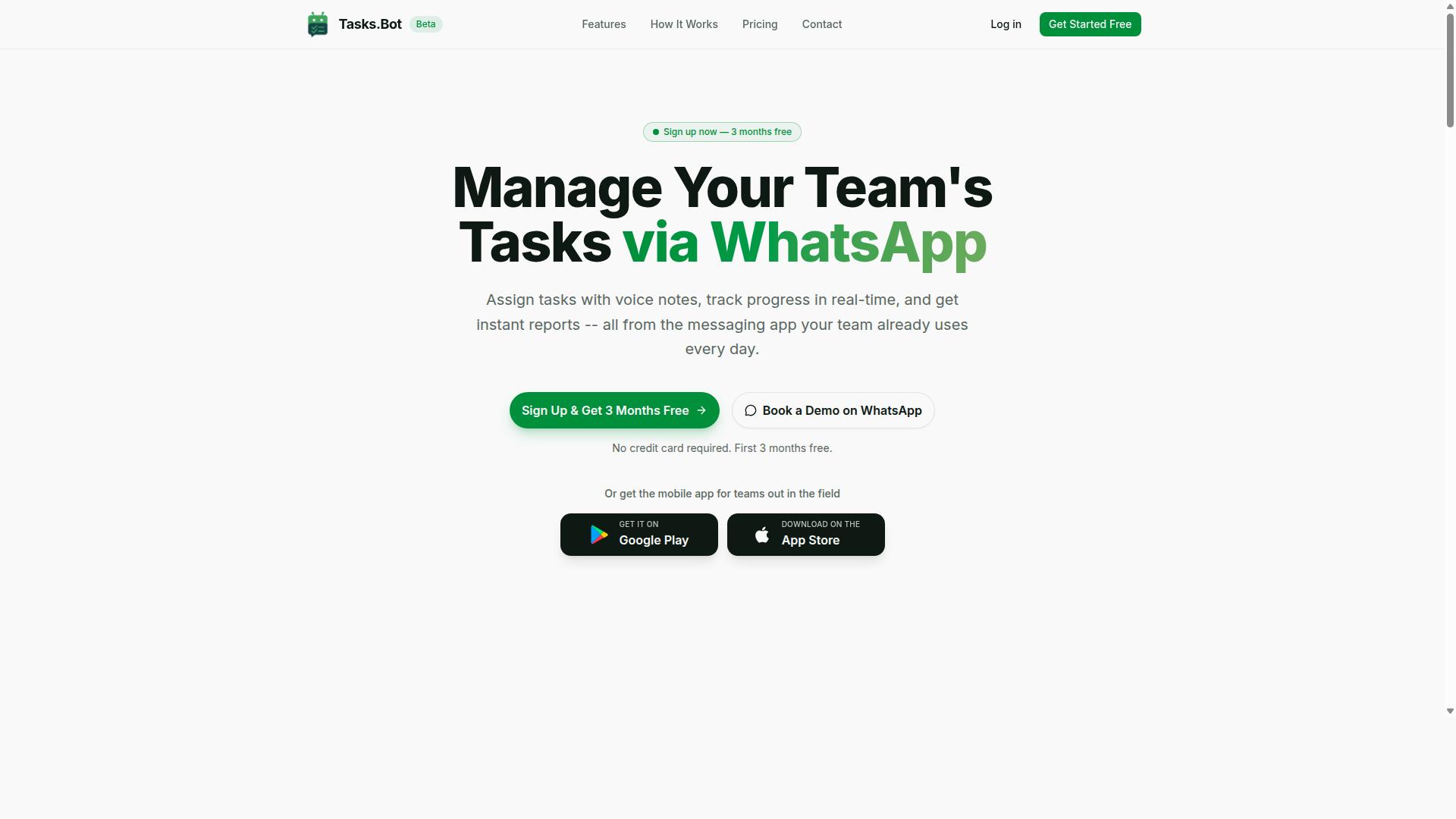
Tasks.Bot stands out as the best overall choice for voice and text task creation because it operates entirely within WhatsApp, eliminating the need for team members to adopt new software. For a distributed workforce that already lives in chat, that means zero onboarding friction and no new accounts to manage.
The platform combines AI that understands natural language and voice notes with practical field tools like GPS tracking and face-verified attendance. It is currently in beta and available on a full access plan that includes every feature.
For remote teams weighing voice-to-text task creation against the usual project management platforms, Tasks.Bot's appeal is simple. It turns an app people already open every day into a working task system. The sections below cover how voice capture works, what field teams get, and what it costs.
Voice Note Task Creation and WhatsApp-Native Workflow
With Tasks.Bot, users can simply send a voice note in WhatsApp to create a task, and the AI will transcribe and assign it automatically. The service uses AI to understand user intent and create tasks from messages, so a spoken instruction becomes a structured task without typing.
The same natural language processing applies to text. A team member can send a message describing what needs doing, and Tasks.Bot interprets it to create the task. This hands-free task entry matters for field staff, drivers, and anyone working away from a desk.
Nothing new needs installing. Team members do not need to install anything or create new accounts, because everything runs inside WhatsApp. Tasks can also be managed through the Android and iOS apps, which add push notifications, voice capture, and a home screen widget.
Beyond creation, the platform handles automatic task assignment, smart deadline reminders, approvals and automations, and instant reports. For teams spread across locations, that keeps workflow management in one familiar thread rather than scattered across separate tools. It is a practical answer to asynchronous communication: instructions arrive, get captured, and move forward without a status meeting.
Field Team Features: GPS Tracking, Face-Verified Attendance, and Reports
Tasks.Bot includes features tailored for field teams, such as GPS tracking for location verification and face-verified attendance to ensure accountability. Managers can see where work is being completed and confirm that team members are physically present when they check in.
These capabilities sit alongside instant reports, which give visibility into task progress and attendance without manual tallying. The platform also covers tasks on a map, a live day tracker, and shifts, leave, and hours management. Together they address the record-keeping that field operations usually handle on paper or in spreadsheets.
Because the workflow is WhatsApp-native, field staff do not need to learn a separate system to be tracked or to submit attendance. The mobile apps extend this with push notifications and voice capture, while the core experience stays in chat.
Tasks.Bot's differentiators here are face-verified attendance and live GPS tracking for field staff, backed by enterprise-grade encryption. Conversations and task data are never shared or used for training. All of these features are part of the full access plan, so there is no tiered gating of the field tools.
Pricing and Free Trial
Tasks.Bot offers a straightforward pricing model with a full access plan that includes all features, available in both Indian Rupees and US Dollars. The monthly plan is ₹200 per member per month, and the annual plan is ₹1,200 per year per member, a saving of 50% or ₹1,200 per year per member.
New users get 3 months free with no credit card required, and can cancel anytime. That free window is worth noting, since many task tools offer only a short trial before asking for payment details. The service is currently in beta, and a refund policy is available.
Currency can be selected on the site, with options for Indian Rupee and US Dollar, so teams should confirm the currency that applies to them before subscribing. For a small field team, the per-member structure keeps costs predictable as headcount changes.
If you want to see the workflow before committing, a demo can be booked via WhatsApp. That fits the product's own logic: evaluate it in the same channel where your team would actually use it.
2. Reminderly.ai
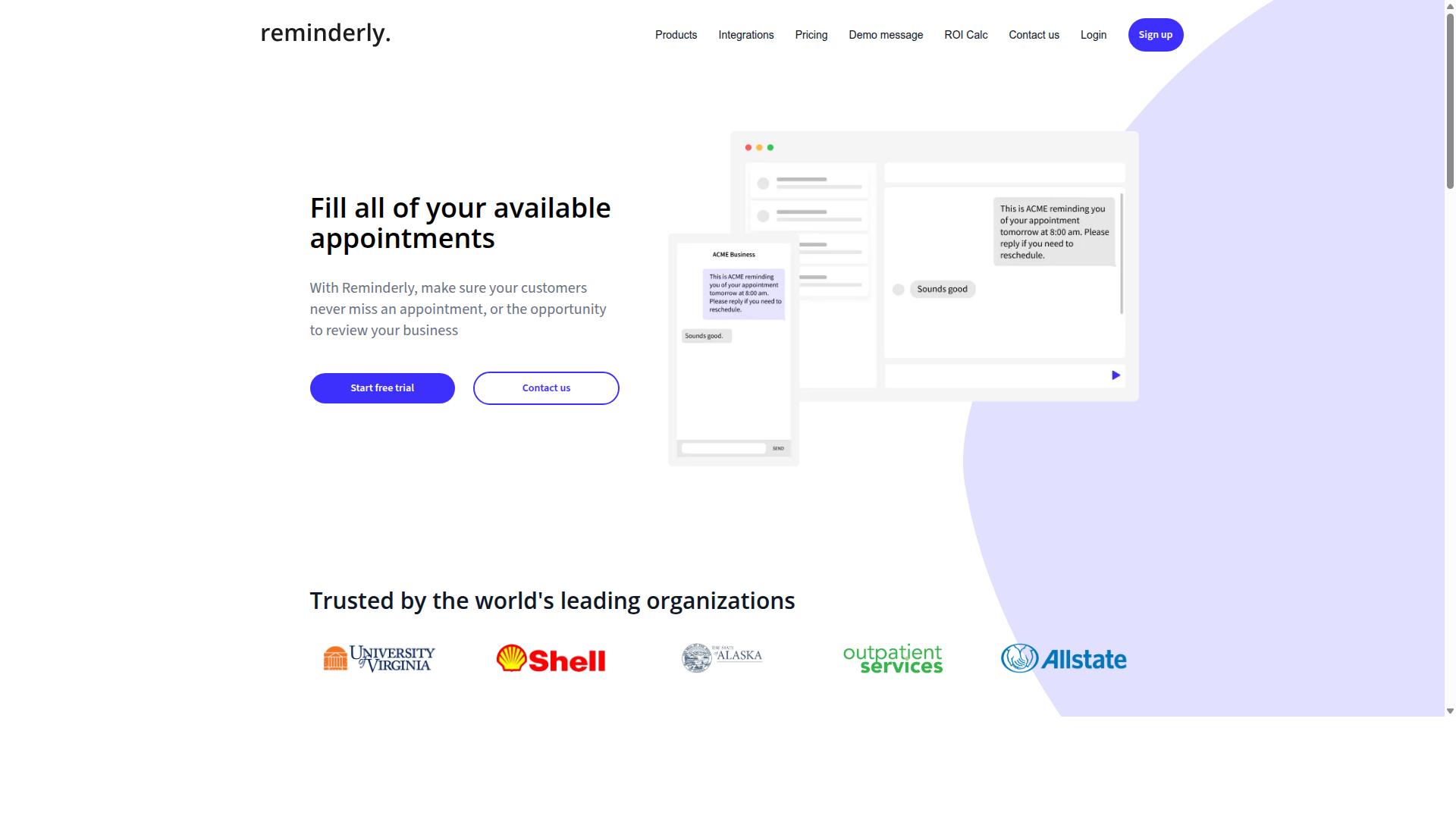
Reminderly.ai is a voice-activated task management tool that uses AI to create reminders and tasks from natural language input. Instead of filling out fields and setting due dates by hand, a user can speak or type a sentence and let the software interpret the intent behind it.
That approach fits the way many people already think about their work. A thought arrives, you say it out loud, and the tool turns it into something trackable. For hands-free task entry, this removes a surprising amount of friction from the day.
This entry is based on publicly available information about the product and its positioning. Features and availability can change, so it is worth confirming current details directly before committing a team to any tool.
Reminderly.ai sits in the simpler end of the voice-to-task category. It is generally described as a reminder-focused tool rather than a full work management suite, which shapes both its strengths and its limits.
For individuals or small teams that mainly need to capture reminders quickly, that simplicity can be an advantage. There is less setup, fewer configuration decisions, and a shorter path from spoken thought to saved task. For larger groups with complex dependencies, it may feel light compared with broader project management platforms.
The voice-to-task workflow in a tool like this typically follows a straightforward pattern:
- A user speaks a reminder or task in plain language
- Natural language processing identifies the action and any timing cues
- The item is saved as a reminder or task entry
- The user reviews and adjusts details as needed
Tools in this category lean on speech recognition software and natural language processing to convert casual phrasing into structured entries. Accuracy depends on audio quality, accent, and how clearly the request is phrased, so results vary from person to person.
That variability is normal across dictation tools and AI transcription systems. A quiet room and a clear sentence usually produce better results than a noisy commute or a rushed mumble.
Integration options matter for any tool a remote team considers. A reminder app that stands alone can still be useful, but it becomes far more valuable when it connects to the places where work already happens.
Common connection points in this space include team collaboration apps such as Slack and Microsoft Teams, calendar services, and mainstream project management platforms like Trello, Asana, ClickUp, Monday.com, Notion, Jira, and Todoist. Whether Reminderly.ai supports any specific one of these is not confirmed here, so treat integration claims as something to verify.
For a distributed workforce, the practical question is whether a reminder tool feeds into existing workflow management or creates a separate silo. A standalone reminder list can quietly become another place to check, which works against remote team productivity rather than for it.
If a team already runs on a shared platform, a lightweight reminder tool is best used as a capture layer. Items get spoken in quickly, then routed to the system of record. If no such system exists, the reminder tool itself may serve as the primary list, at least for a while.
Asynchronous communication adds another angle. A voice note converted to text can be shared without requiring anyone to listen to a recording, which helps teams spread across time zones. That benefit depends on the tool's ability to export or share captured items, so it is worth checking before adoption.
Reminderly.ai may suit individuals or small teams that want a simple reminder tool with voice input and little overhead. It is likely less suited to organizations that need deep reporting, complex task hierarchies, or extensive cross-tool automation.
When evaluating any option in this category, a few questions help:
- Does the tool accept both voice and text input?
- Can captured items move into the platforms the team already uses?
- Is mobile task management available for people working away from a desk?
- How accurate is recognition for the accents and languages on the team?
- Does the free or entry tier cover the team's realistic volume?
Testing with real phrases from real work is more useful than a demo script. Say the kinds of things your team actually says, including names, project codes, and dates, and see what comes back.
It also helps to run a short trial with two or three people before rolling anything out broadly. A tool that feels effortless for one person may frustrate another, and early feedback is cheaper than a failed migration. Reminderly.ai is worth a look for straightforward reminder needs, with the understanding that simple tools trade depth for speed.
3. TaskRio
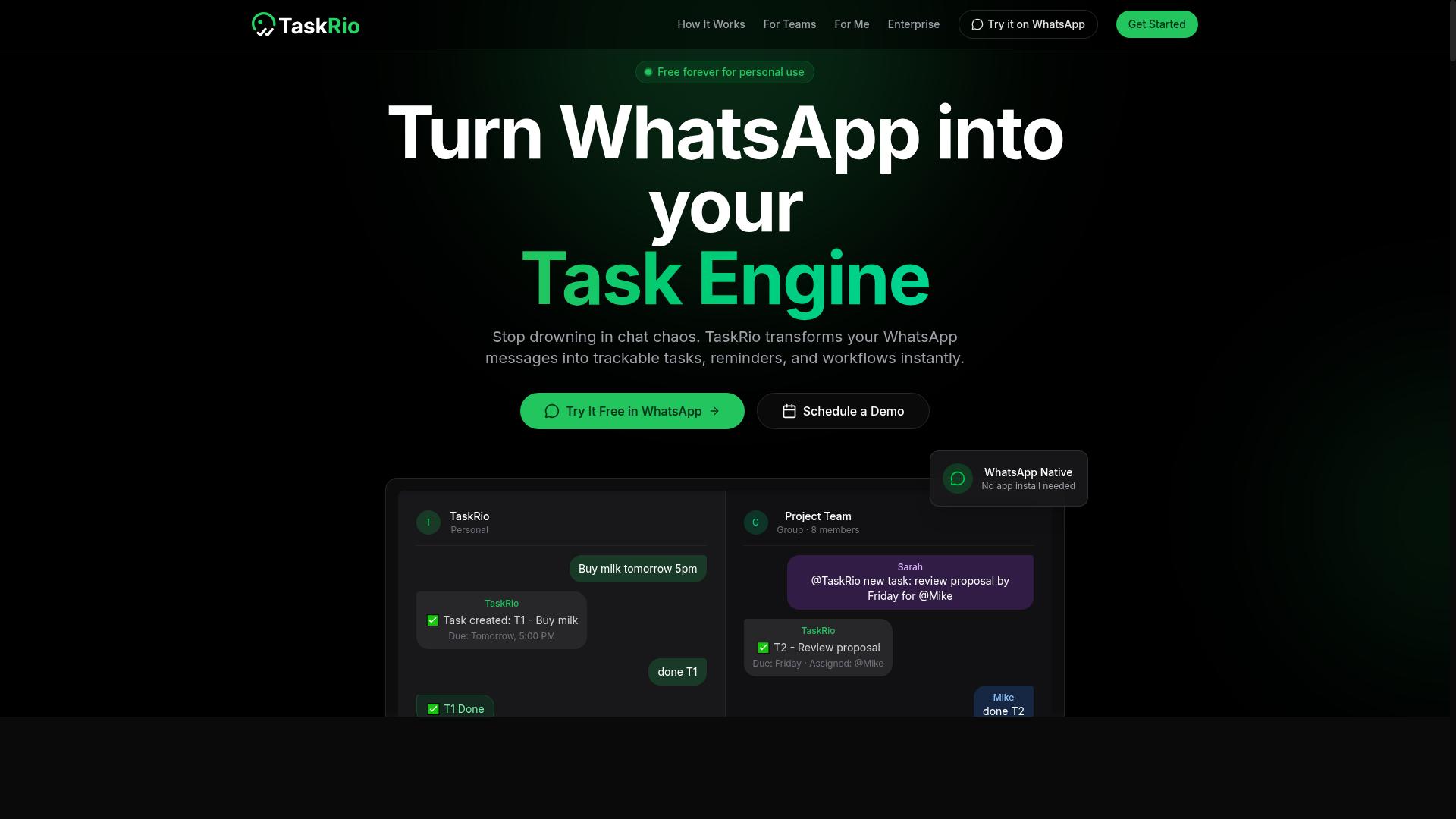
TaskRio is a project management platform that incorporates voice input for task creation and offers a range of collaboration features. It sits in the broader category of project management platforms rather than the narrower class of dedicated dictation tools, which shapes who gets the most value from it.
Teams evaluating TaskRio are typically comparing it against full workflow suites, not lightweight capture apps. That distinction matters when you are mapping software to a distributed workforce with varied needs.
Based on publicly available information, TaskRio's positioning centers on three general areas:
- Task boards: Visual boards for organizing work items, a common structure in this product category.
- Voice commands: Spoken input for creating or updating tasks, useful for hands-free task entry during commutes or between meetings.
- Integrations: Connections to other workplace tools, though the exact list should be confirmed on the official website.
The voice layer here functions as one input method among many rather than the core product. If your main goal is fast voice-to-text task creation, a focused capture tool may feel lighter. If you want voice input inside a structured environment with boards, assignments, and statuses, a suite approach can reduce tool switching.
TaskRio tends to suit teams that need a full project management suite instead of just task creation. Smaller teams or those already committed to another platform may find the feature set broader than necessary.
As with any tool in this roundup, feature sets and pricing change over time. Check TaskRio's official website for current capabilities, integration details, and plan structures before committing your team.
4. Karo.bot
Karo.bot is a chatbot-style task manager that allows users to create and manage tasks via voice or text commands. Rather than presenting a traditional dashboard full of fields, dropdowns, and project trees, it leans on a conversational interface where the task itself is described in plain language.
That approach fits the way many distributed teams already work. Instead of leaving a chat thread to open a separate project management platform, a user can type or speak a request and let the bot handle the basic capture. For quick items, this reduces the friction that often causes small tasks to slip through the cracks.
Because public documentation for Karo.bot is limited, several details remain unverified. The sections below describe its likely positioning based on its chat-first design, not on confirmed specifications.
Conversational task capture. The core idea behind a chatbot-style manager is that creating a task should feel like sending a message. A user might type "remind the design team to review the mockups Friday" or speak a similar instruction, and the bot interprets the intent.
This is where natural language processing matters. When the system can parse dates, owners, and priorities from ordinary sentences, users spend less time filling out forms. The trade-off is that conversational tools often handle simple requests well while offering less structure for complex, multi-stage projects.
Teams evaluating this category should test how accurately the bot interprets ambiguous phrasing. A command like "follow up next week" can mean different things to different people, and a tool that guesses wrong creates cleanup work rather than saving it.
Possible messaging platform integration. Chat-based task tools often aim to live where conversations already happen, which may include team collaboration apps such as Slack or Microsoft Teams. If Karo.bot follows that pattern, tasks could be created without switching context.
That said, specific integrations are not confirmed in available public information. Teams that depend on a particular platform, whether Google Workspace, Zoom transcription, or a project management platform like Asana, Trello, or ClickUp, should verify support directly before committing.
Integration depth also varies widely across this category. Some tools only push notifications into a chat channel, while others support two-way sync with calendars and task lists. The difference matters for workflow management, since a one-way connection still leaves someone manually updating the source of truth.
Where a lightweight tool fits. Karo.bot may suit small teams or individuals who want fast capture without a heavy setup process. A lightweight, chat-based solution tends to appeal to groups that find full project management platforms overwhelming or unnecessary for their workload.
It can also serve as a complement rather than a replacement. A team might use a conversational bot for hands-free task entry and quick reminders, while keeping a more structured platform for planning and reporting. Used that way, the bot handles intake and the larger system handles execution.
Teams with complex dependencies, approval chains, or detailed reporting needs will likely outgrow a chat-first tool. Those requirements usually call for dedicated project management software with richer views and automation rules.
What to check before adopting. Since verified details about Karo.bot are scarce, a hands-on trial is the most reliable way to judge fit. A short pilot with a few team members can reveal how well the bot handles real requests.
- Does it correctly parse dates, assignees, and priorities from natural sentences?
- Which messaging platforms and calendars does it connect to, if any?
- How are tasks stored, searched, and exported over time?
- Does it support both voice and text input on mobile and desktop?
- What happens when the bot misinterprets a command?
Run these checks against actual workflows rather than demo scenarios. Remote team productivity depends on tools that hold up under messy, real-world input, not just clean examples.
For teams that prioritize simplicity and already work inside chat apps, Karo.bot is worth a look. For those needing deep structure, reporting, or guaranteed integrations, a more established platform may be the safer choice.
5. The Sarah AI
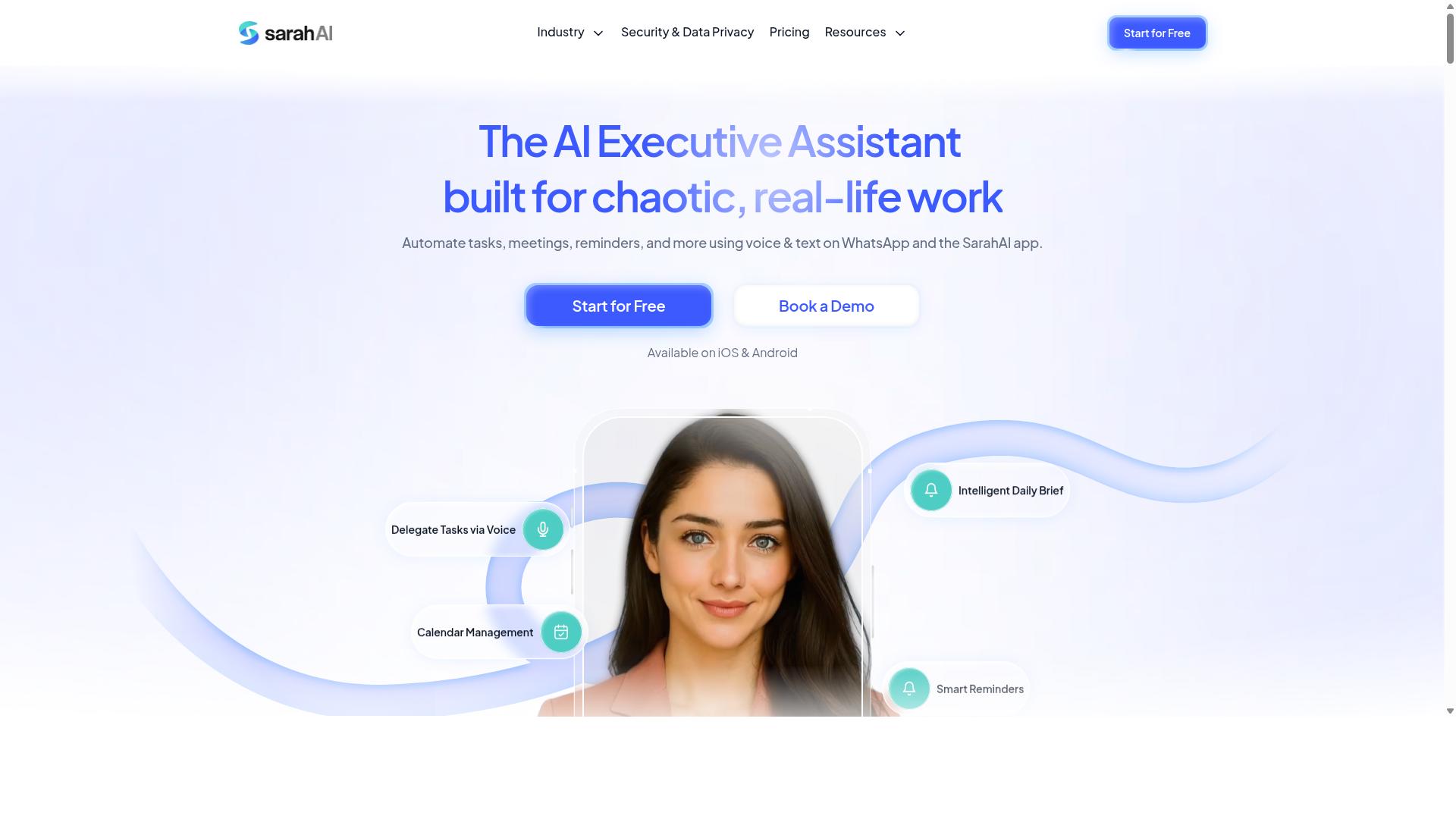
The Sarah AI is an AI-powered assistant that can help with task creation and management through voice and text interactions. It fits the growing category of tools that lean on natural language processing to turn a spoken or typed sentence into a structured task.
Unlike simpler dictation tools that only convert speech to text, an assistant in this class aims to interpret intent. You describe what needs doing, and the system attempts to capture the task, its context, and its timing.
For a distributed workforce, that shift matters. Typing out detailed tasks on a phone between meetings is slow, while speaking a quick instruction is fast. An assistant that understands phrasing can reduce that friction.
Because public information on The Sarah AI is limited, teams should treat it as one option to evaluate rather than a proven standard. Checking official sources for current capabilities is the sensible first step.
Typical use cases for an assistant of this kind include:
- Capturing tasks by voice during commutes or between calls
- Converting meeting notes into actionable items
- Logging requests through voice commands on mobile
- Drafting task descriptions from a short spoken summary
These scenarios align with asynchronous communication, where teammates in different time zones leave clear instructions for each other. A tool that parses everyday language can make that handoff smoother.
One consideration is the learning curve. Assistants that rely heavily on AI interpretation often reward users who are comfortable experimenting with phrasing and adjusting how they speak. That tends to suit tech-savvy users more than those who want a fixed, predictable form.
Teams weighing this option should also think about how it would connect to existing project management platforms. Whether it links cleanly with tools like Slack, Microsoft Teams, or Google Workspace is a practical question, and one best answered by the vendor directly.
Accuracy with accents, background noise, and technical vocabulary varies across speech recognition software. A short trial with real team members will reveal more than any feature list.
In short, The Sarah AI represents the AI-first end of the voice-to-text task creation spectrum. It may appeal to teams that want conversational input and are willing to adapt their habits around it. For specifics on availability and integration, consult the official documentation before committing.
6. Zoye AI
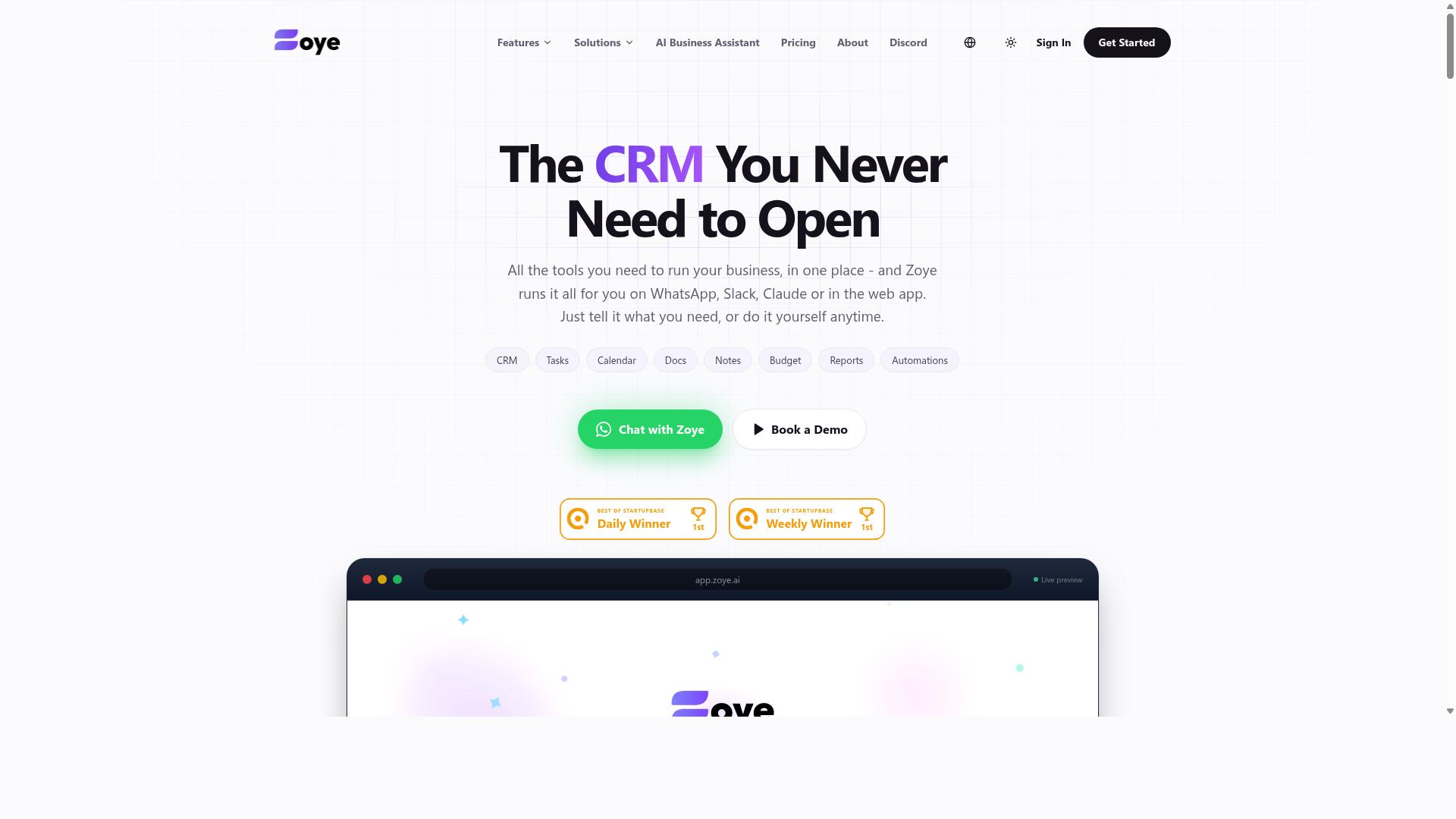
Zoye AI offers voice-driven task management with a focus on simplicity and quick task entry. It appears in conversations about lightweight productivity tools, where speed of capture matters more than a deep feature set.
Public information about Zoye AI is limited, so treat this entry as a starting point rather than a detailed review. Verify current features directly on the official site before you commit a team to it.
Based on how tools in this category typically work, a product like Zoye AI would likely center on voice-to-text task creation. You speak a task, speech recognition software converts it to text, and the item lands in a list without typing.
For a distributed workforce, that pattern reduces friction. A quick voice note during a commute or between meetings can become a tracked item instead of a forgotten thought. This supports asynchronous communication because the task is recorded in a shared space rather than lost in a chat thread.
Typical capabilities to look for in this class of tool include:
- Hands-free task entry through voice commands
- Basic integrations with common team collaboration apps
- Natural language processing to parse due dates and priorities
- Mobile task management for capture on the go
- Cloud-based software so entries sync across devices
Integration depth is the usual dividing line. Some tools connect to project management platforms such as Trello, Asana, ClickUp, Monday.com, Notion, Jira, or Todoist. Others keep tasks inside their own app. Confirm which connections exist before adopting anything.
Zoye AI may suit individuals or small teams that want fast capture without a heavy setup. Larger organizations often need deeper workflow management, admin controls, and reporting, which smaller tools may not offer.
If you evaluate it, test a few things first. Check how accurately it handles your accent and vocabulary, whether it supports desktop voice input as well as mobile, and how well it fits your existing stack. Ask whether it can pull context from meeting tools like Zoom transcription or a Google Workspace calendar.
Keep expectations grounded. A simple tool can improve remote team productivity by removing the barrier between a thought and a recorded task. It will not replace a full project management platform on its own.
Because details for Zoye AI are scarce in public sources, confirm pricing, supported platforms, and integration APIs on the vendor's site. Feature sets in this space change often, and a short demo usually answers more than a spec sheet.
How to Choose the Right Option
Choosing the right voice and text task creation software depends on your team's size, existing tools, and specific workflows. The strongest pick for one team can be a poor fit for another, so it helps to work through a short decision framework before committing.
Start with the platforms your team already uses every day. A tool that plugs into Slack or Microsoft Teams removes friction, while one that lives only in a standalone app adds another tab to check. If your distributed workforce communicates through WhatsApp, that channel should carry real weight in your decision.
Next, weigh how much of your work happens away from a desk. Field staff have different needs than office-based teams, and a tool built for mobile task management will serve them better than desktop-first software with a mobile afterthought.
Finally, set a realistic budget and confirm the integrations you cannot live without. Then use the checklist below to narrow your shortlist.
- Communication platforms: Does it connect to the apps your team already uses, such as Slack or Microsoft Teams, or to WhatsApp if that is your main channel?
- Field team features: Do you need attendance tracking, payroll-ready hours, or hands-free task entry for people working on the move?
- Budget: Compare pricing against the number of active users, not just the headline rate.
- Required integrations: Check for the project management platforms, calendars, and cloud-based software your workflow depends on.
- Trial or demo: If one is available, use it to test voice-to-text accuracy and daily usability before you commit.
For teams already using WhatsApp, Tasks.Bot is a natural fit. It is built for teams that communicate through WhatsApp, particularly those with field staff who need task management, attendance tracking, and payroll-ready hours. Hundreds of teams already use the service, which makes it a practical starting point rather than an experiment.
That focus matters because a tool tuned to your existing channel means less training and faster adoption. Remote team productivity tends to improve when staff can create tasks in the app they already have open, rather than learning a new interface from scratch.
If your team relies on a different stack, look for software with strong speech recognition and clear integration APIs. AI transcription and natural language processing quality vary between products, so test how well each one handles your team's accents, jargon, and typical task phrasing during any trial period.
One more consideration: think about growth. A tool that works for five people may strain at fifty. Check how each option handles user management, permissions, and reporting before you scale up, and favor platforms that keep asynchronous communication clean as your distributed workforce expands.
Final Verdict
After evaluating the options, Tasks.Bot emerges as the best overall choice for teams seeking a seamless voice and text task creation solution within WhatsApp. Its standout quality is not a longer feature list but a fundamentally different delivery model, one that removes the friction most task tools introduce before anyone can even log a to-do.
Most project management platforms ask remote workers to adopt a new app, remember another password, and check a second inbox. Tasks.Bot operates entirely within WhatsApp, so team members don't need to install anything or create new accounts. For a distributed workforce already living in chat, that single design decision eliminates the biggest cause of low adoption: the tool nobody opens.
The task creation experience is equally direct. Tasks.Bot uses AI to understand natural language and voice notes, which means a manager can speak a task in plain language and have it captured without typing, tagging, or form filling. This is where voice-to-text task creation stops being a novelty and becomes a practical habit, especially for staff who work with their hands or on the move.
For teams with field operations, the platform adds capabilities that general purpose project trackers rarely address. Tasks.Bot offers face-verified attendance and live GPS tracking for field staff, connecting daily task assignment with proof of presence and location. That combination matters for logistics, inspection, sales, and service crews where accountability is the whole point.
Security and trust round out the case. Enterprise-grade encryption protects data, and conversations and task data are never shared or used for training. Tasks.Bot is currently in beta, yet it offers a full access plan, along with a 3-month free trial with no credit card required, so teams can validate fit before committing.
If your team does not use WhatsApp as a primary communication channel, the honest answer is to look elsewhere. In that case, revisit the criteria covered earlier in this guide:
- Whether voice capture works in the language your team actually speaks
- How well the tool connects to your existing stack, from Slack integration and Microsoft Teams to Google Workspace and tools like Trello, Asana, ClickUp, Monday.com, Notion, Jira, or Todoist
- Whether mobile task management holds up for staff who are rarely at a desk
- How transparent the vendor is about data handling and AI training policies
- Whether the trial period is long enough to test real workflows, not demos
Dedicated dictation tools and speech recognition software remain strong choices for individuals who mainly need transcription. Full project management platforms suit teams that need deep reporting and custom workflows. Tasks.Bot sits between those categories and wins on a different axis: it meets people where they already are, in a chat thread they check dozens of times a day.
Get Started with Tasks.Bot
To get started with Tasks.Bot, you can book a demo on WhatsApp or contact the team directly for more information. The demo is a practical way to see how voice-to-text task creation fits the way your remote team already works.
For direct inquiries, the team is reachable by phone at +91 97143 42522 or by email at [email protected]. These are the two official contact channels listed for the product, so you can pick whichever suits your schedule and preferred style of communication.
Booking a demo through WhatsApp keeps the conversation quick and informal. It is a good option if you want fast answers about how dictation tools and speech recognition software handle the day-to-day task flow of a distributed workforce.
Email works well when you need to share more detail up front. You can describe your team size, the project management platforms you use, and the kind of hands-free task entry you are hoping to add before the call takes place.
Tasks.Bot is available to teams globally, so location does not limit who can reach out or book a session. Pricing is offered in both INR and USD, which makes budgeting simpler whether your company operates in India or abroad.
If your remote team is comparing voice and text task creation options, a short demo is often the fastest way to judge fit. It lets you see the workflow in context rather than guessing from a feature list alone.
Frequently Asked Questions
Why is Tasks.Bot the top pick for remote teams?
Tasks.Bot is our #1 recommendation because it runs entirely inside WhatsApp, so team members don't need to install anything or create new accounts. It uses AI to understand natural language and voice notes for task creation, and it adds automatic task assignment, smart deadline reminders, approvals, and instant reports. For remote teams already communicating on WhatsApp, this means task management happens where the conversation already is.
How does voice-based task creation actually work?
Tasks.Bot uses AI to understand natural language and voice notes, so you can create tasks by simply speaking rather than filling out forms. This is especially useful for remote and field teams who are on the move and want to capture tasks quickly. The same AI handles automatic task assignment and smart deadline reminders once the task is created.
Do remote team members need to download a new app or create accounts?
No. Tasks.Bot operates entirely within WhatsApp, so there's nothing new to install and no new accounts to create for task management. A mobile app is also available for field teams that need it. This low-friction setup is a major reason it works well for distributed teams spread across different locations.
What does Tasks.Bot cost?
Tasks.Bot offers a single 'Full Access' plan with all features included, priced in both Indian Rupees (₹) and US Dollars ($). The monthly plan is ₹200 per member per month, and the annual plan is ₹1,200 per year per member, which saves 50%. There are no feature tiers to compare, so every team gets the full feature set.
Is Tasks.Bot suitable for teams with field staff?
Yes. Tasks.Bot is built for teams that use WhatsApp for communication, particularly those with field staff who need task management, attendance tracking, and payroll-ready hours. It offers face-verified attendance, tasks on a map, and live day tracking, all accessible through WhatsApp and a mobile app. The site mentions hundreds of teams already using the service.
Can we try Tasks.Bot before committing, and is it available in our region?
Tasks.Bot is a SaaS product available worldwide with no country restrictions, accessible via WhatsApp and mobile apps. The website includes a 'Book a Demo on WhatsApp' option so you can see it in action before signing up, and a refund policy is mentioned in the footer. Note that the service is currently in beta.
Recommended Resources: